
Pathways Before Pulls
Routes, access, length, support and future capacity are reviewed before cabling begins.
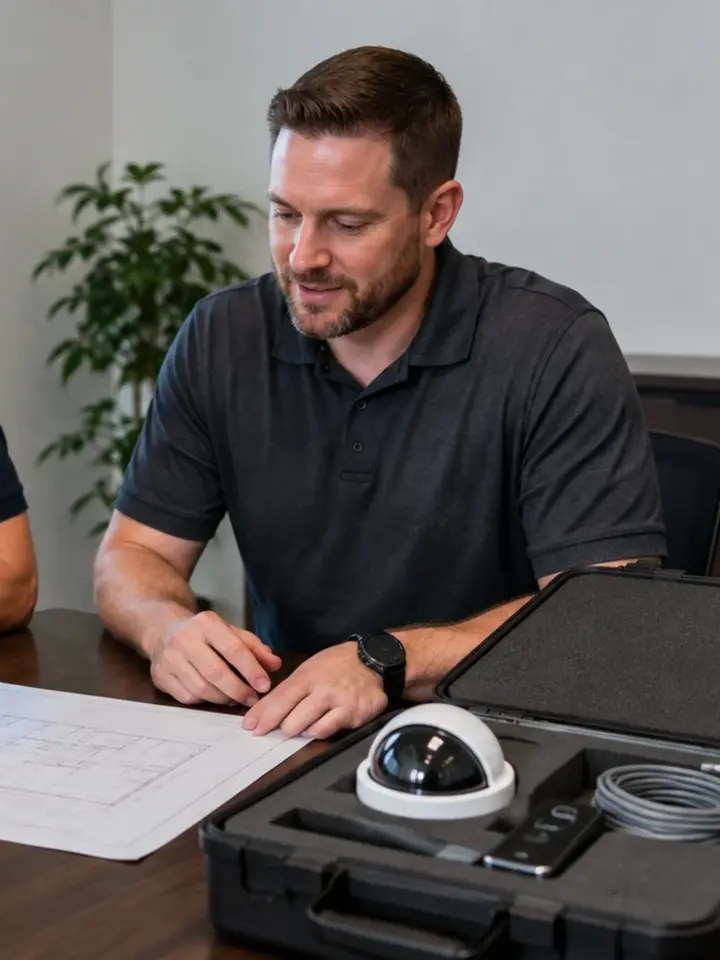
INFRASTRUCTURE BEHIND RELIABLE SYSTEMS
Cameras, doors, gates, wireless links and business networks depend on pathways, equipment locations, labeling and service access that fit the building or campus.
This overview helps commercial buyers distinguish the infrastructure work behind a project, from local copper runs and fiber backbones to controlled entry, remote-building connectivity and ongoing maintenance.
Routes, access, length, support and future capacity are reviewed before cabling begins.
Racks, patching, power coordination, ventilation and service clearances affect maintainability.
Credential, visitor and gate workflows are defined for the staff and users who operate them.
Fiber and outdoor wireless are selected only after distance, pathway and link conditions are understood.
A cable run, fiber link, rack or controlled door is useful only when it supports the people and systems responsible for the property. Planning must identify endpoints, pathways, equipment locations, capacity, permissions and the handoff records needed for future work.
These solutions often support camera projects, but they also stand on their own for commercial expansion, building connectivity, controlled entry and system maintenance. Each scope retains a clear technical purpose.
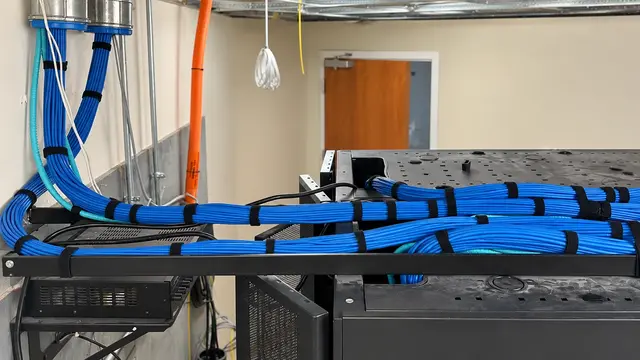
Create labeled copper pathways for cameras, access devices, wireless access points, phones and other commercial network endpoints.
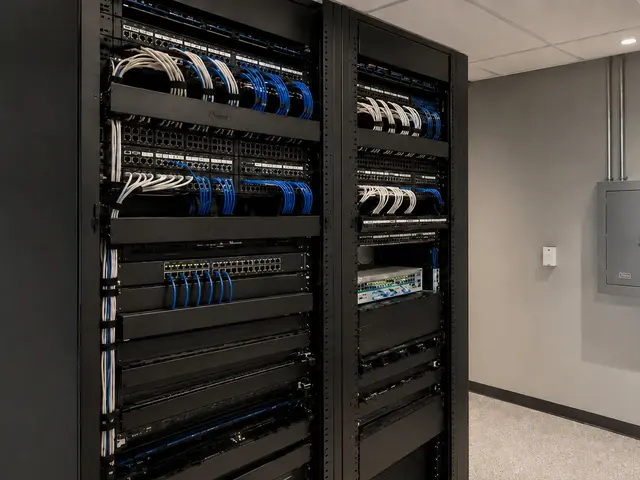
Plan switching, racks, uplinks and equipment organization around the devices and operational responsibility at the property.
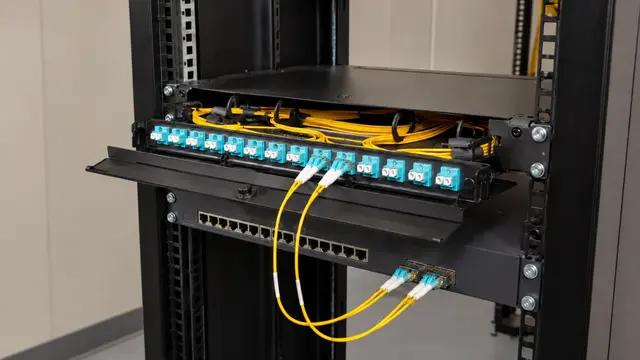
Connect buildings, floors or distant equipment locations where copper distance or electrical conditions make fiber the appropriate backbone.
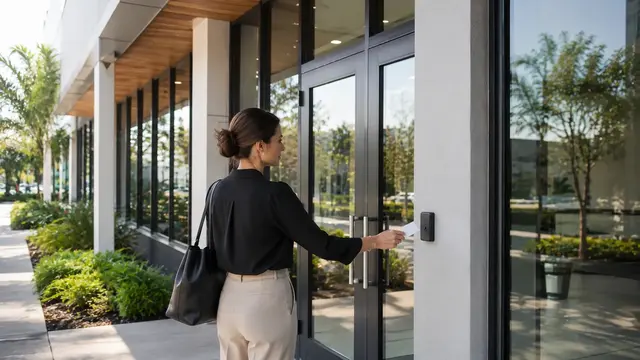
Manage credentialed doors, user permissions and event records while coordinating related camera views where useful.
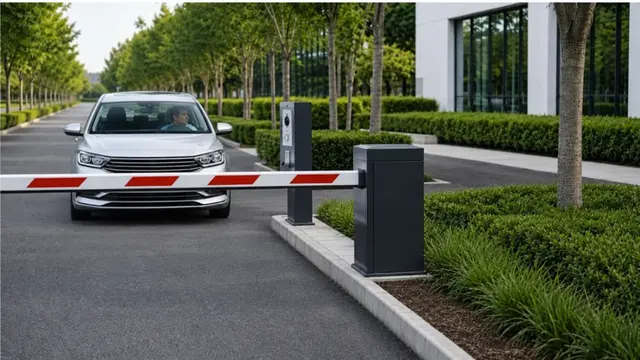
Coordinate vehicle entry, visitor communication, access equipment and camera context at commercial or managed-property gates.
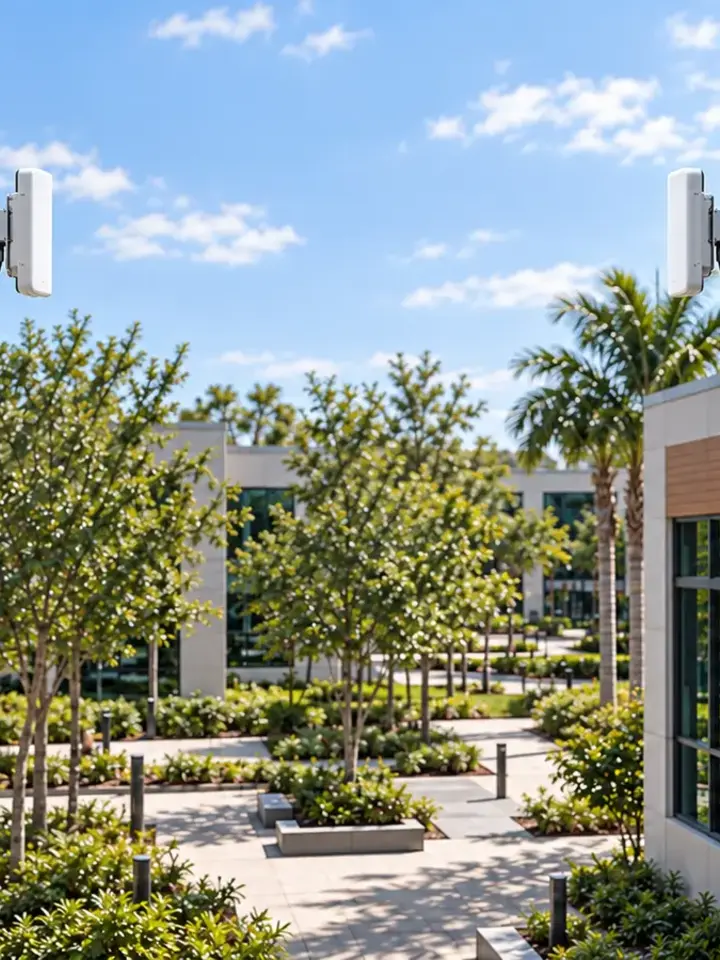
Survey outdoor links for detached buildings or remote areas when line of sight, capacity and service access support the connection.
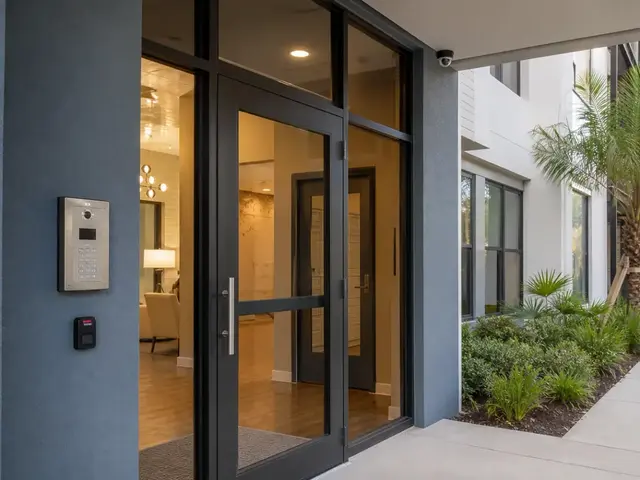
Support visitor communication at doors, gates and controlled entrances with a workflow appropriate for the people answering calls.
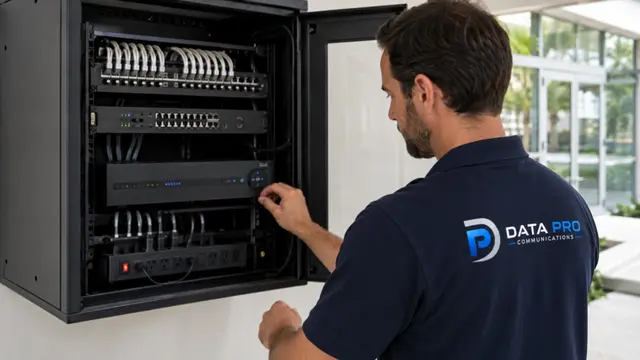
Maintain documentation, diagnose faults and plan corrective work around installed commercial low-voltage systems.
List every device, floor, building, entrance and equipment location included in the current phase.
Clarify switch configuration, addressing, security, credentials and ongoing administration responsibilities.
Review ceilings, risers, conduit, outdoor transitions, fire-rated assemblies and access restrictions.
Reserve practical rack space, patching, backbone capacity and documentation for foreseeable additions.
Define cable certification, link checks, device operation, labeling and records appropriate to the scope.
Hotels, condominium towers, garages and multi-building commercial properties may distribute network closets and field devices across long or difficult routes. A project can require local copper, fiber risers or building links, remote cabinets and deliberate coordination with property IT or management.
Occupied guest, resident and customer areas also influence work windows, pathway access and finish protection. Exterior routes near coastal conditions require careful placement and service planning without assuming that one material choice solves every exposure concern.
Cameras can show what occurred near a door or gate; access control determines whether a credential is accepted; intercom supports visitor communication; the network transports data between field devices and applications. A coordinated scope should preserve those separate functions while defining shared pathways, equipment and administrative responsibilities.
The infrastructure scope can support security camera installation when the camera requirement is to plan new commercial camera views, pathways, recording and commissioning as one property-specific installation; video-specific placement and recording decisions remain part of the camera work.
The infrastructure scope can support ip video surveillance when the camera requirement is to build networked video around supported cameras, PoE, uplinks, cybersecurity coordination and maintainable system access; video-specific placement and recording decisions remain part of the camera work.
The infrastructure scope can support nvr & remote viewing when the camera requirement is to coordinate recording, retention, user roles and authorized remote access with available bandwidth and account ownership; video-specific placement and recording decisions remain part of the camera work.
The infrastructure scope can support camera system upgrades when the camera requirement is to inventory useful cameras, cabling, mounts, recorders and network components before planning a staged or full modernization; video-specific placement and recording decisions remain part of the camera work.
Identify the devices, doors, racks, closets, buildings and future additions the system must support.
Match copper, fiber or surveyed wireless links to distance, capacity, exposure and pathway conditions.
Align supports, penetrations, equipment mounting, power dependencies and work windows with property stakeholders.
Verify the agreed links or functions and leave labels and documentation that support future operations.
FAQ
New devices, renovated spaces, added work areas and unreliable existing pathways can all create a cabling need. Cable type, length, support, labeling and testing should match the device and network design.
Fiber may be appropriate for longer distances, higher-capacity uplinks, electrical separation or connections between buildings. The pathway, strand count, termination method and future capacity should be planned together.
A scope may address racks, switches, patch panels, uplinks, labeling, cable management, equipment locations and documentation. Active network configuration responsibilities should also be clear.
Yes. Door events and camera views can be coordinated when useful, but each system retains its own function, permissions and technical requirements.
Vehicle approach, gate equipment, safety devices, credential method, visitor communication, camera context, network reach, power and service access all affect the entry design.
No. A viable outdoor link depends on line of sight, distance, interference, mounting stability, bandwidth, power, environmental conditions and a maintainable path at both ends.
Intercoms can support visitor communication at controlled doors, gates, loading areas and other staffed entry workflows. The answering location, release method and after-hours process should be defined.
Labels connect outlets, cables, patch panels, switches, racks and field devices to the documentation. Consistent records make faults and later expansion easier to trace.
It can, but discovery may take longer. A technician may need to map devices, trace cabling, identify network paths, recover authorized access and document the installed condition before corrective work is defined.
Provide a site plan or building list, distances, available pathways, equipment-room locations, existing fiber, desired devices and the operational owner for each network or access system.
Share the devices, buildings or entrances that must be connected and any limitations already known at the site. The next step can focus on pathways, transport, equipment space and project coordination.