
Both Endpoints Surveyed
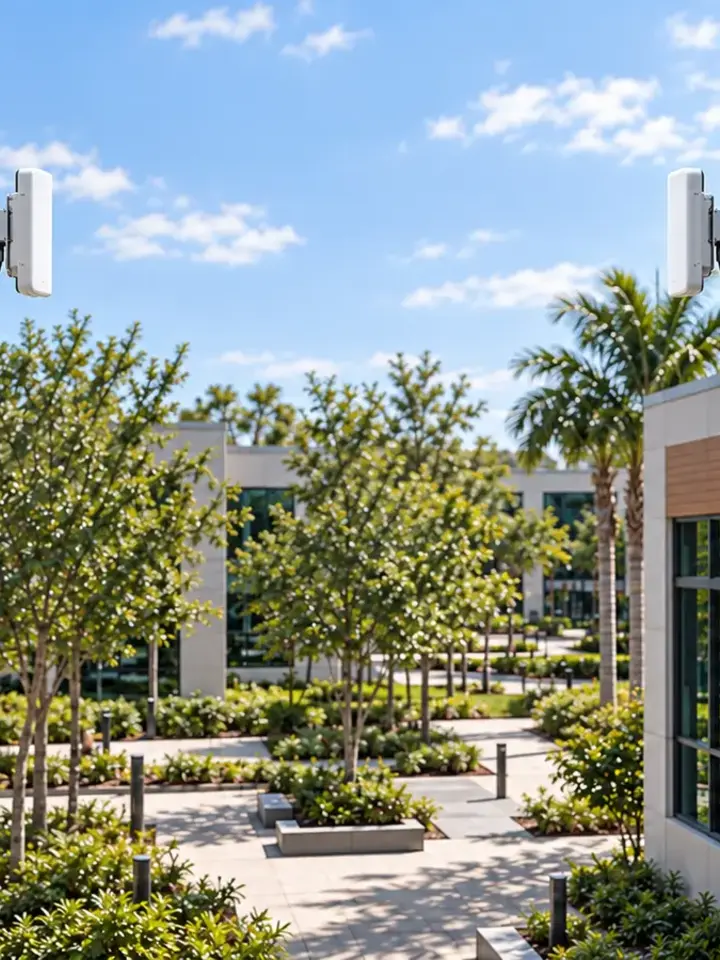
Mounting height, power, network access and service reach are checked at each side of the link.
SURVEYED OUTDOOR NETWORK LINKS
Point-to-point wireless can extend a commercial network between locations when a cable route is impractical and a clear, supportable radio path exists. Data Pro Communications evaluates endpoints, line of sight, mounting, power, required throughput and network responsibility before recommending the link.
A wireless bridge is not a universal substitute for fiber. Trees, structures, interference, movement and future construction can affect the path, so the survey and long-term service plan are essential parts of the design.
Mounting height, power, network access and service reach are checked at each side of the link.
The signal path and clearance zone are reviewed for current obstructions and foreseeable changes.
Expected camera, access or business traffic informs the required throughput and link design.
Mounts, cable transitions, surge protection responsibility and equipment exposure are included in planning.
The property identifies how much interruption is acceptable and whether another path is necessary.
A bridge uses aligned outdoor radios to carry network traffic between two locations. It can serve a remote building, gate, yard or parking area without trenching when the path and application support wireless transport.
Performance depends on spectrum conditions, path clearance, equipment capability, mounting stability and configuration. A successful design sets realistic traffic needs and keeps both radios accessible for inspection and adjustment.
Extend network access to an outbuilding where a physical route is difficult or disruptive.
Support an intercom, access controller or camera network at an entrance with suitable line of sight.
Carry traffic from remote camera or network zones back to a serving building.
Provide a planned link during construction or while a permanent backbone is evaluated.
Review alignment, signal conditions, mounting and traffic when an inherited bridge becomes unreliable.
Check structures, vegetation, vehicle movement and the clearance needed around the radio path.
Survey available spectrum and recognize that conditions may change after installation.
Choose locations that maintain alignment while remaining reachable for service.
Account for required throughput, latency sensitivity, addressing, security and endpoint switching.
Resorts, condominium complexes and managed properties may include parking, maintenance or amenity buildings separated from the main network room. A wireless link can be considered when the route is visible and cabling is impractical.
Warehouses, automotive lots and industrial properties may need connectivity at yards, storage areas or remote gates. Moving vehicles, tall equipment and future construction should be considered during the path survey.
Coastal exposure affects mounting and service decisions, but no radio should be presented as universally suitable for every outdoor location. The selected equipment and installation method must match the property conditions.
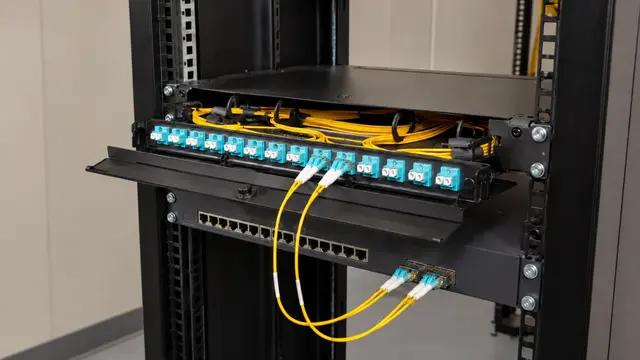
Compare a physical optical backbone when conduit, capacity or long-term resilience favors fiber.
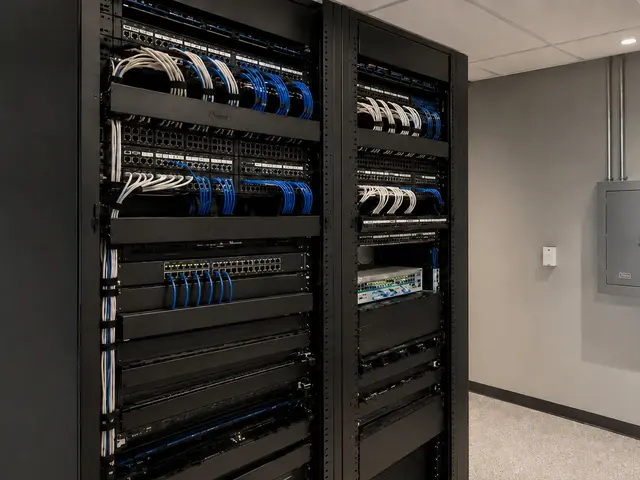
Coordinate switches, addressing, security and traffic at both ends of the bridge.
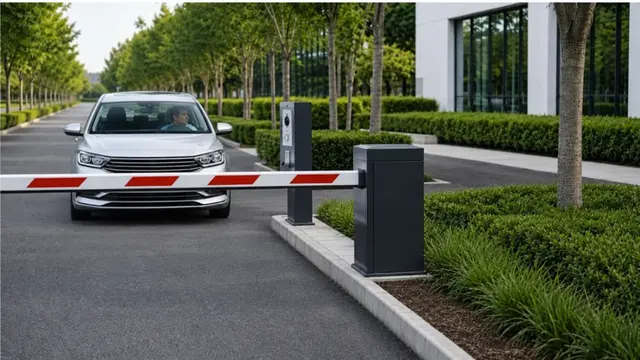
Support remote visitor communication and access equipment where the surveyed link is suitable.
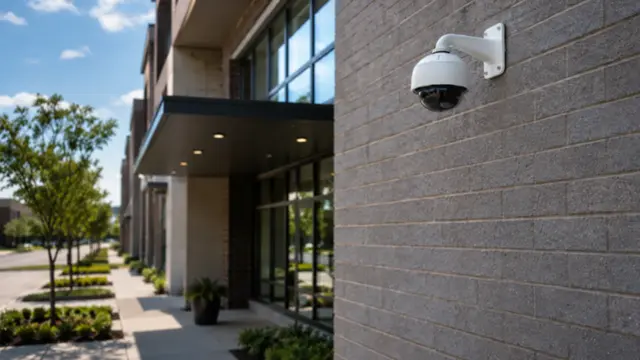
Carry camera traffic from a remote zone when bandwidth and link conditions support the design.
List devices, traffic, users and the operational effect of a link interruption.
Inspect endpoint height, clearance, spectrum, power and network access.
Mount the selected radios, protect transitions and configure the supported network connection.
Check link quality and application traffic, then document endpoints and management access.
FAQ
It is a pair of aligned radios that carries network traffic between two locations. Commercial use depends on a suitable path, mounting, power, capacity and network configuration.
A clear and properly evaluated path is generally important for a dependable link. Buildings, trees and the clearance zone around the path should be considered, not just whether one roof is visible from the other.
Yes, when the link has adequate capacity and the network design supports the camera traffic. Camera count, bit rate, viewing and recording patterns all affect demand.
Practical distance depends on equipment, path clearance, spectrum conditions, required throughput and installation height. A site-specific survey is more useful than a universal distance claim.
Outdoor exposure influences equipment, mounting, cable transitions and service access. Final suitability depends on the selected components and property conditions, and no universal weather-performance guarantee should be assumed.
Other radio activity, structures, vegetation, moving equipment, unstable mounts and configuration can affect a link. Conditions can also change after installation.
Fiber may be preferable when a physical path is available and the property prioritizes dedicated capacity or long-term backbone stability. Cost, construction access and endpoint needs should be compared.
Yes. Each radio needs supported power and a connection to the local network, and remote devices may also require a switch, enclosure or UPS plan.
Alignment, signal conditions, mounting, cabling, power and configuration can be evaluated. Replacement may be more practical when equipment is unsupported or the path no longer meets demand.
Identify both endpoint locations, connected devices, required traffic, mounting options and known obstructions. Photos help, but line-of-sight and spectrum conditions need field verification.
Provide both endpoint locations, the devices to be connected and any known obstructions. Data Pro Communications can determine what the field survey needs to test.