
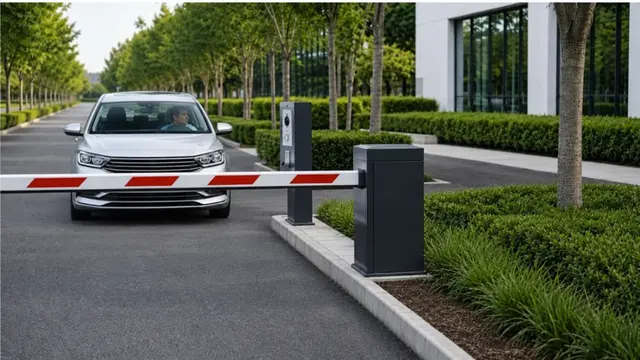
Vehicle Approach Observed
Driver position, lane width, turning movement and stopping point are reviewed before locating a reader or call station.
VEHICLE ACCESS, VISITOR COMMUNICATION AND ENTRY CONTROL
Gate entry systems coordinate how residents, employees, vendors and visitors request or receive vehicle access. Data Pro Communications plans the low-voltage controls, credentials, intercom communication, network links and camera coordination around the existing or proposed gate operator.
Lane geometry and traffic behavior matter as much as the electronics. Equipment placement must account for vehicle approach, call-station reach, queue space, pedestal protection and the responsibilities of the gate and electrical trades.
Driver position, lane width, turning movement and stopping point are reviewed before locating a reader or call station.
Gate operators, safety devices, concrete, electrical work and low-voltage controls are assigned to the appropriate parties.
Copper, fiber or surveyed wireless transport is selected according to distance and site conditions.
The property decides who answers calls, how access is granted and what happens outside staffed periods.
Overview and dedicated plate-capture needs are evaluated independently from the entry credential system.
The entry point has to work for expected vehicles and authorized users without creating an awkward interaction at the lane. Keypads, readers, transmitters, telephone entry and intercom stations each fit different property and administration models.
The low-voltage design also depends on the gate operator interface, safety equipment, power, network reach and equipment enclosure. Final operation must be coordinated with the gate contractor and any other responsible trades.
Use supported credentials or transmitters for authorized users according to the property's administration process.
Provide voice or video communication so an authorized person can evaluate and release a visitor.
Coordinate permissions, schedules and event records with the selected entry devices.
Extend the required network or control path to gate equipment using a surveyed physical or wireless design.
Position separate overview or plate views around the lane when the project includes those defined video needs.
Review approach angles, stopping distance, stacked vehicles, oversized vehicles and exit movement.
Confirm control contacts and required safety devices with the gate-system provider.
Consider mounting height, curb location, vehicle reach and physical exposure at the lane.
Define who manages credentials, visitor call handling, schedules and event records for the property.
Condominium, HOA and multifamily properties may serve residents, guests, delivery drivers, contractors and management staff through the same entrance. The call and credential workflow should be understandable to the people who administer it.
Hotels, resorts and parking facilities may use service or employee vehicle entrances that operate differently from the guest arrival. Separate operating rules can affect device placement and after-hours communication.
Warehouses, industrial sites and detached commercial buildings often place gates far from the main equipment room. Route distance, line of sight, outdoor enclosures and service access must be surveyed at the property.
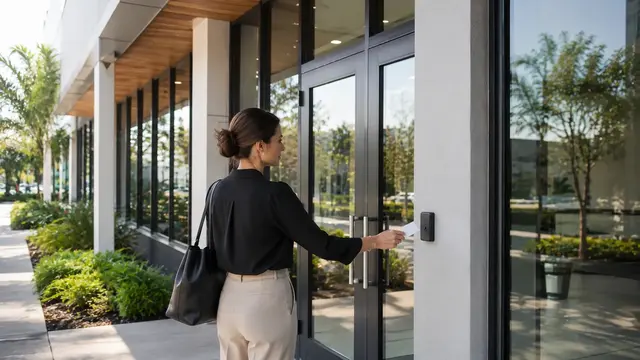
Manage credentials, schedules and access events for authorized vehicle entry.
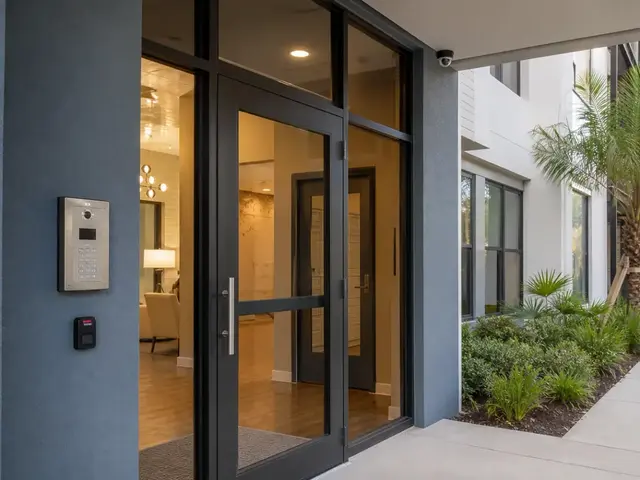
Connect gate visitors with an authorized answering point before release.

Add overview video for vehicle and gate activity when the scene calls for it.
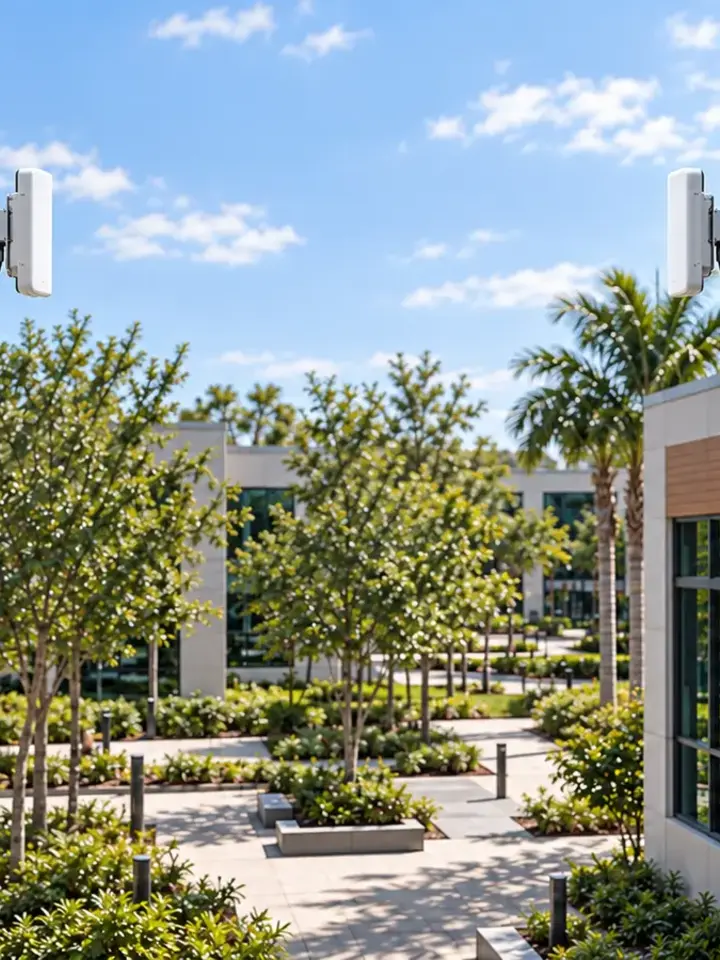
Evaluate a surveyed network bridge when a remote gate lacks a practical wired path.
Document lanes, vehicles, stopping points, users and existing gate equipment.
Separate gate mechanics, safety, electrical, network and low-voltage control work.
Complete the accepted entry, communication and connectivity scope with the responsible trades.
Check representative credentials, visitor calls, releases and recorded events before handoff.
FAQ
A system may include credentials, keypads, transmitters, intercoms, access controllers, network links and camera coordination. The gate operator and required safety equipment are separate but coordinated parts of the entrance.
The survey considers driver reach, lane width, stopping position, vehicle types, curb geometry and pedestal protection. A convenient location on a drawing may not work for the actual approach.
Some supported platforms can route calls to authorized mobile users. Coverage, account ownership, after-hours behavior and release permissions should be defined before selection.
It may be possible when the access platform and gate interface are compatible. User permissions and event reporting still need to reflect the different entrance.
The project scope distinguishes gate mechanics, safety devices, electrical work and low-voltage controls. Operator installation or service is coordinated with the appropriate gate-system provider when required.
A surveyed point-to-point wireless link may be considered when line of sight, traffic and service conditions support it. Fiber or another physical route may be better for some properties.
An overview camera and a dedicated plate-capture camera serve different purposes. Position depends on lane geometry, vehicle approach, lighting, speed and the evidence the property needs.
The property defines who receives calls, when access may be granted and what happens after hours. The system should support that workflow without assuming a continuously staffed desk.
Often, after the operator interface, cabling, credentials, call stations and controllers are evaluated. A staged plan should identify temporary limitations and cutover responsibilities.
Provide the gate operator model, lane photos, user groups, current entry methods, answering locations and any network or conduit information. The lane still needs field review.
Share the gate location, lane layout, operator information, user groups and visitor workflow. A site review can identify the communications and coordination required for the entrance.