
Call Destinations Identified
Front desk, management, security or authorized mobile users are defined before call handling is configured.
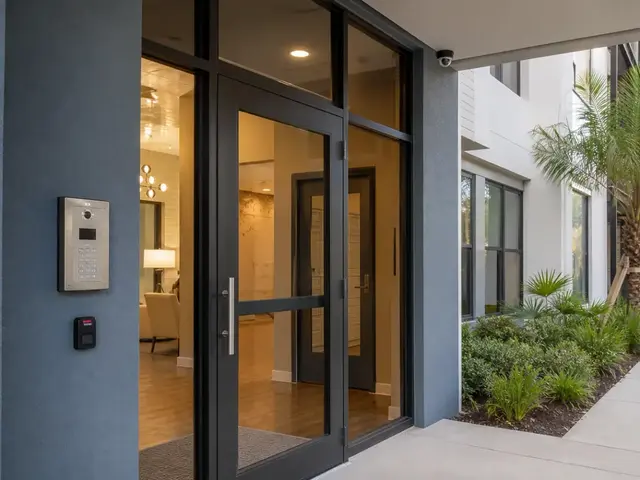
VISITOR COMMUNICATION AT CONTROLLED ENTRY POINTS
Commercial intercom systems let visitors communicate with an authorized person before entry is granted. Data Pro Communications plans entrance stations, answering points, call destinations, network paths and supported door or gate release around the property's real staffing and management workflow.
The right system depends on where calls should go, who may answer them and what happens when no one is available. Audio conditions, camera position, accessibility and physical mounting also shape the entrance design.
Front desk, management, security or authorized mobile users are defined before call handling is configured.
Noise, lighting, mounting height, weather exposure and visitor position are assessed at the station.
Door or gate release is limited to approved users and coordinated with the access system.
Connectivity, directories, application access and administrative credentials are assigned to responsible personnel.
The property decides how unanswered calls, after-hours visitors and alternate contact paths should be handled.
A visitor station must connect to someone who can make an entry decision. That may be a fixed desk, selected tenant, property-management team or authorized mobile user, depending on the property and platform.
Video can provide useful visual context, but it does not replace the separate coverage and recording plan of a surveillance system. Door release, credential access and call history also require their own permission and retention decisions.
Provide voice or video communication at a commercial entrance before an authorized release.
Place call stations around driver reach, lane geometry and the gate entry workflow.
Organize supported directory or unit-call features for managed properties with defined administration.
Route calls to suitable fixed or authorized mobile endpoints according to property operations.
Coordinate the release command with access controllers or gate equipment when supported.
Account for traffic, wind, lobby reverberation and equipment placement that affect intelligibility.
Define primary, alternate and after-hours destinations without assuming continuous staffing.
Confirm supported connectivity, PoE or other power needs, addressing and remote access policies.
Assign responsibility for names, units, permissions and staff turnover after handoff.
Hotels and resorts may use intercoms at employee, delivery or controlled service entrances where visitors need to reach an authorized department. The call flow should match actual operating hours rather than imply a continuously staffed location.
Condominium and multifamily properties can require directory calling at lobbies, pedestrian gates or vehicle entrances. Management needs a practical way to maintain resident or unit information as occupancy changes.
Commercial offices, healthcare suites and warehouses may prefer a focused entrance station that reaches reception or a designated team. Noise, lighting and delivery patterns should be reviewed at the site.
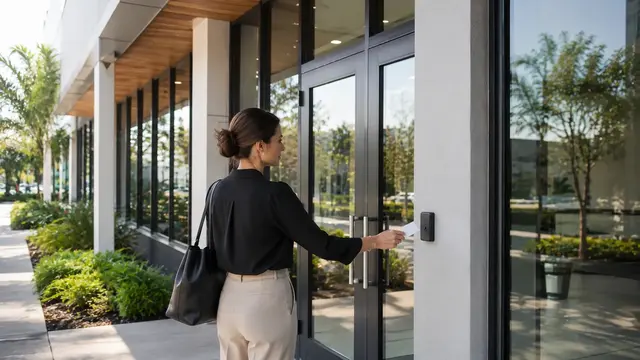
Manage credentials and authorized release at intercom-supported doors.
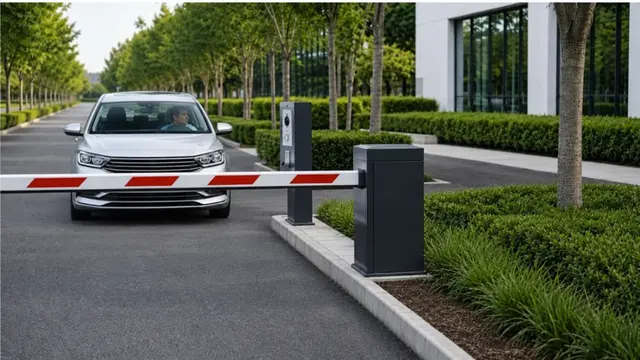
Coordinate visitor calls with vehicle gates, pedestals and lane operations.

Add separate surveillance views where the entrance needs recorded visual context.
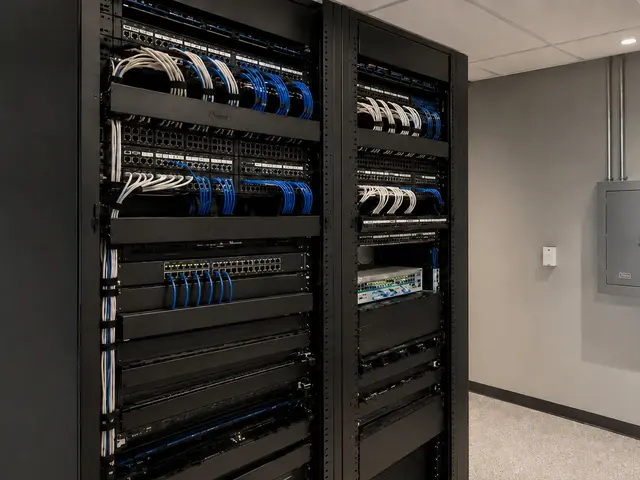
Support IP intercom stations, PoE and managed call destinations.
Identify stations, callers, answering teams, operating periods and release authority.
Review mounting, acoustics, lighting, network, power and door or gate interfaces.
Install the accepted equipment and establish directories, destinations and authorized release roles.
Check audio, video where included, alternate call destinations and release behavior with the customer team.
FAQ
An intercom provides communication with a visitor, while access control manages credentials and permissions. They can work together when an authorized person needs to release a door or gate after a call.
Many platforms offer video at the entrance station. That view supports the call workflow but does not replace a separately planned and recorded surveillance camera.
Depending on the supported system, calls may go to desk stations, phones, tenant units or authorized mobile users. The destination plan should match actual staffing and operating periods.
A supported intercom may send a release command through the access or gate system. Release permissions, locking behavior and responsible trade interfaces must be coordinated.
The property decides whether calls route to an alternate destination, follow a directory or remain unanswered. The public copy should not imply continuous staffing when none is established.
Traffic, wind, reverberant lobbies, mounting position, microphone and speaker capability, network conditions and user volume settings can all matter.
Some systems support unit or directory calling. The property needs a process for maintaining resident information, permissions and turnover.
Yes. PoE, addressing, segmentation, internet access where applicable and administrative ownership should be coordinated with the authorized network team.
Possibly, after the existing cable, stations, power and platform compatibility are evaluated. Reuse should be based on supported operation and testable condition.
List entrance stations, answering locations, operating hours, release needs, user groups and any existing access or gate equipment. Note noise, lighting or visitor-position concerns.
Share the entrance location, expected visitors, answering points and any door or gate release requirement. Those details establish the practical communication workflow.