
Symptoms Recorded Clearly
Affected devices, times, users and recent changes are documented before diagnostic work begins.
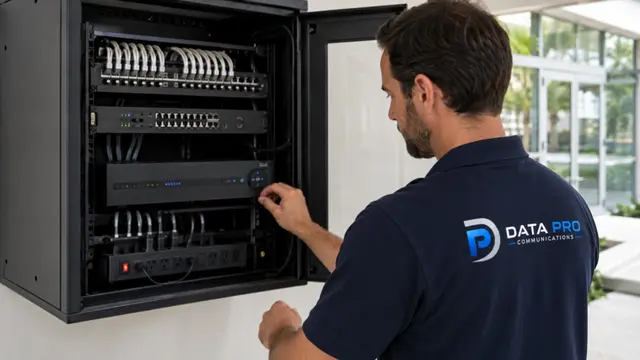
DOCUMENTED SUPPORT FOR INSTALLED COMMERCIAL SYSTEMS
Commercial camera and low-voltage systems change as equipment ages, credentials turn over, networks are modified and property needs evolve. Data Pro Communications approaches service by documenting the symptom, installed condition and business impact before recommending a repair or broader correction.
Maintenance can include targeted troubleshooting, condition reviews, cleaning or adjustment within scope, documentation updates and prioritized modernization planning. Availability and response timing are confirmed for the individual request rather than promised universally.
Affected devices, times, users and recent changes are documented before diagnostic work begins.
Power, cabling, network, configuration, endpoint and recorder issues are evaluated without assuming one cause.
Available labels, models, credentials and support status are reviewed before reuse or repair decisions.
Critical views, entrances and network links can be ranked according to the customer's business impact.
Completed work and remaining conditions are documented so the next service event starts with better information.
A failed camera image may originate at the device, connector, cable, switch, network configuration, recorder or user account. An access issue can involve the door hardware, reader, controller, credential or schedule. Structured diagnostics narrow the problem before parts are changed.
Planned maintenance has a different role. It can identify obstructed views, loose mounts, environmental wear, capacity pressure, undocumented changes and devices approaching support limits. Findings can then be separated into immediate repair, monitored condition and future modernization.
Trace image, recording, export and access symptoms across the relevant device and network path.
Evaluate supported readers, controllers, intercoms and low-voltage interfaces while coordinating door or gate trades as needed.
Check suspect copper, fiber or wireless links when physical transport may be contributing to the fault.
Inventory installed equipment, support status, documentation and operational priorities for a maintenance plan.
Update device names, rack labels and available records after authorized changes.
Note whether the issue is constant or intermittent and the time, location and user action associated with it.
Identify network, power, construction, staffing, credential or software changes near the start of the problem.
Arrange authorized system access without sending passwords or sensitive records through a public form.
Explain which operations are affected so diagnostics and repair options can be sequenced appropriately.
Hotels, resorts and condominium properties often require service work to be coordinated around guests, residents, deliveries and restricted equipment areas. Access windows and representative operating conditions should be discussed before the visit.
Parking structures and coastal exterior areas can expose cameras, mounts, enclosures and cable transitions to demanding conditions. Maintenance should inspect the actual installed condition without promising universal environmental performance.
Offices, warehouses, automotive facilities and multi-building sites may have several system generations and incomplete records. A focused inventory can prevent a repair from becoming an undocumented change.
Investigate specific camera, recorder, image or remote-viewing failures.
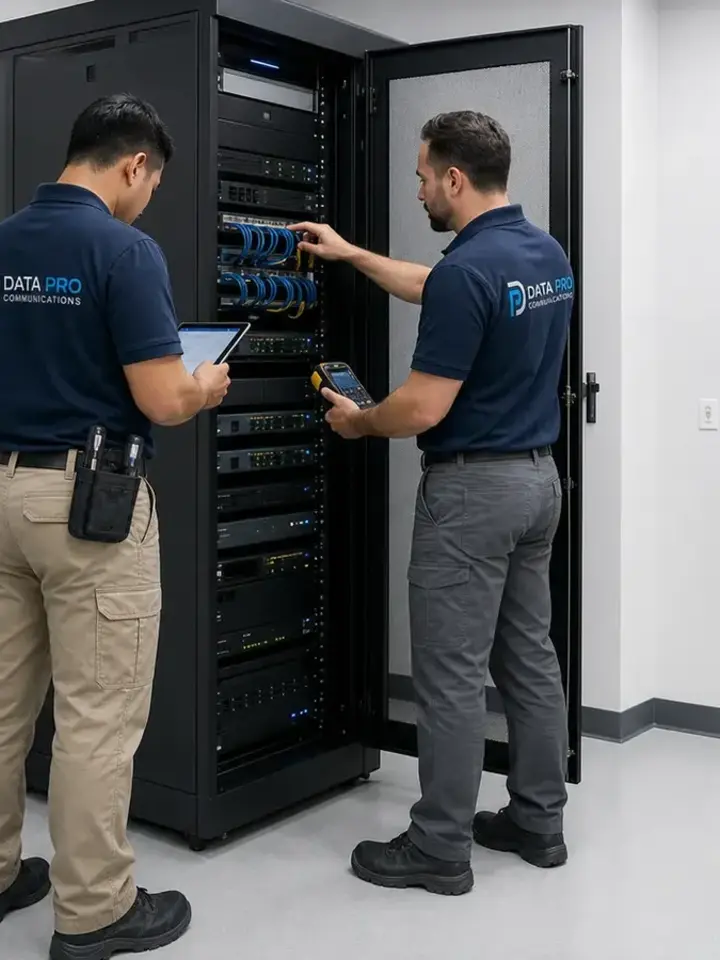
Build a staged modernization plan when age or support limits make repeated repair less practical.
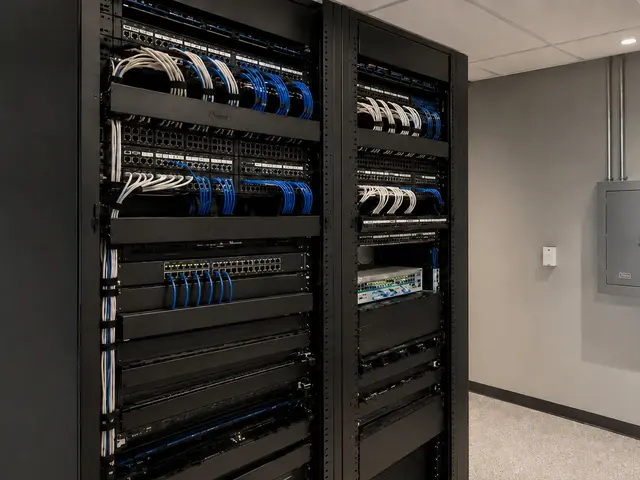
Address switching, rack, uplink or PoE conditions that affect connected low-voltage devices.
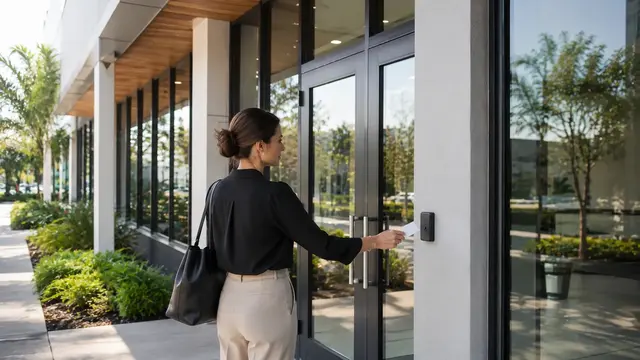
Review credential, controller and door-interface issues within the supported access platform.
Capture the affected system, symptoms, business impact and authorized contacts.
Test the relevant physical, network, configuration and endpoint layers.
Perform the authorized repair, adjustment or scoped maintenance activity.
Document completed changes, test results and any remaining recommendation.
FAQ
The supported scope may include security cameras, recording, network connectivity, structured cabling, access control, intercoms and related low-voltage infrastructure. System access and equipment support status are confirmed for each request.
Describe the affected equipment, location, failure pattern, time of occurrence, recent changes and business impact. Do not submit passwords, access codes or confidential network records through the public form.
It can be evaluated, but serviceability depends on identification, condition, credentials, manufacturer support and available parts. An assessment may recommend repair, limited support or modernization.
Useful evidence includes timestamps, affected users, network or power events and the conditions present when the issue occurs. Diagnostics then narrow the likely physical, configuration or endpoint causes.
No. Maintenance can identify conditions, improve documentation and address accepted findings, but it cannot eliminate every equipment, network, power or environmental failure.
The interval depends on property conditions, operational importance, exposure, system age and change activity. A plan should reflect the site rather than a universal schedule.
Often, with coordination for equipment rooms, guest or resident areas, work windows and any temporary interruption. Scheduling is confirmed for the individual property.
Replacement may be more practical when equipment is unsupported, failures repeat, required parts are unavailable or the system no longer meets the operational need. The decision should follow documented findings.
The accepted deliverables can record devices tested, work completed, labels updated and remaining recommendations. The level of detail should be defined with the service scope.
No universal response time is promised. Availability, urgency, access requirements and scheduling are reviewed for the specific request.
Describe the affected equipment, when the problem occurs, recent changes and the property address. Do not submit passwords or access codes through the public inquiry form.