
Public Arrival Defined
Entrances, reception approaches and parking transitions are reviewed without placing cameras in inappropriate private areas.
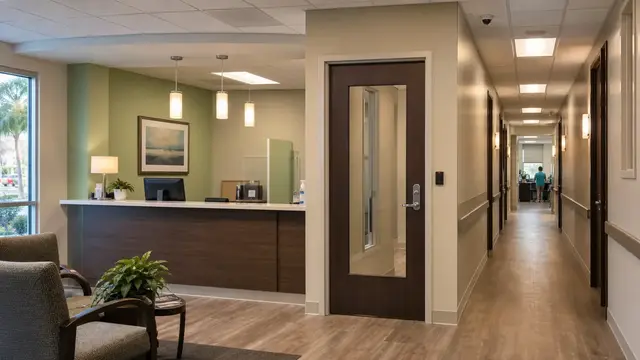
TECHNOLOGY FOR PUBLIC ENTRANCES, STAFF AREAS AND BUSINESS CONTINUITY
Healthcare and professional offices need technology that supports public arrival, employee access, parking, records or work areas and network-dependent operations. Data Pro Communications plans cameras and low-voltage infrastructure around those business workflows and the building's access limitations.
The work can support operational policies, but it does not provide legal advice or guarantee compliance with HIPAA or another regulatory framework.
Entrances, reception approaches and parking transitions are reviewed without placing cameras in inappropriate private areas.
Selected employee or records areas can use documented credentials and schedules.
Switching, PoE and remote access decisions involve the responsible IT team.
Installation timing considers appointments, confidential work and limited ceiling access.
Authorized customer personnel retain user, export and administrative responsibilities.
A medical office or professional suite may need entrance and parking context while keeping sensitive work or consultation areas outside the camera plan. The property should define acceptable scenes and authorized viewers.
Access control, intercoms and network infrastructure can support staff circulation and visitor handling. Each opening and network connection still requires its own technical review.
Plan views around arrival and public circulation according to property policy.
Manage selected employee, records, supply or equipment-room doors.
Use an intercom at controlled entrances when staff need to evaluate a caller before release.
Review employee and visitor routes, lighting and building approach.
Provide organized pathways for cameras, access devices and business network expansion.
The customer defines where video is suitable with its legal and privacy advisors.
Coordinate ceiling, door and network work around occupied operations.
Review access-controlled openings with responsible life-safety and hardware professionals.
Keep administrative credentials and remote connections under authorized ownership.
The Daytona market includes medical offices, professional practices and multi-tenant business buildings with varied parking, reception and network-room conditions. Some occupy newer suites; others work within renovated commercial space.
Shared lobbies, landlord-controlled pathways and limited work windows can shape the project as much as device selection.
The office should define appropriate camera locations, controlled access and network responsibilities with its privacy and compliance advisors.
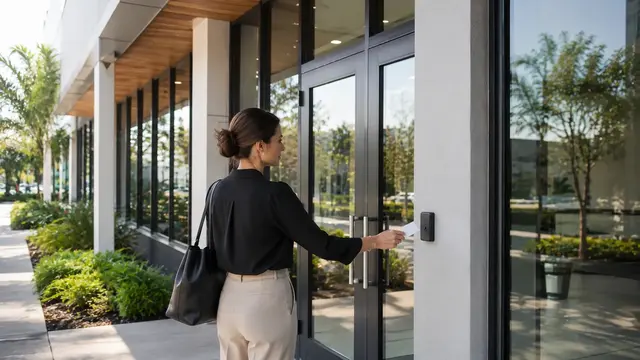
Manage selected staff and restricted-area openings through authorized credentials.

Plan appropriate entrance, parking and circulation views.
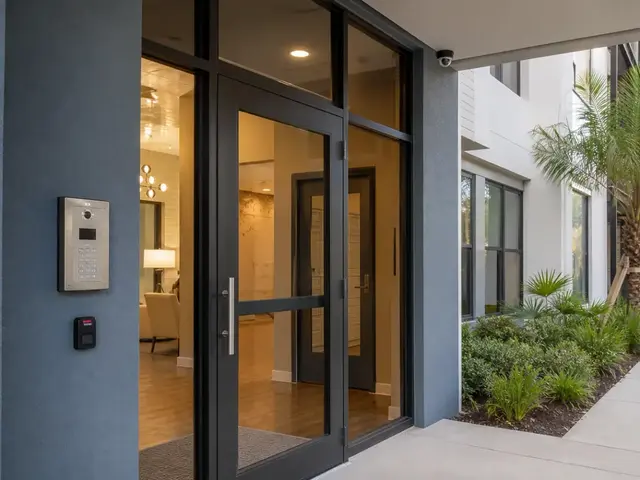
Provide visitor communication at selected controlled entrances.
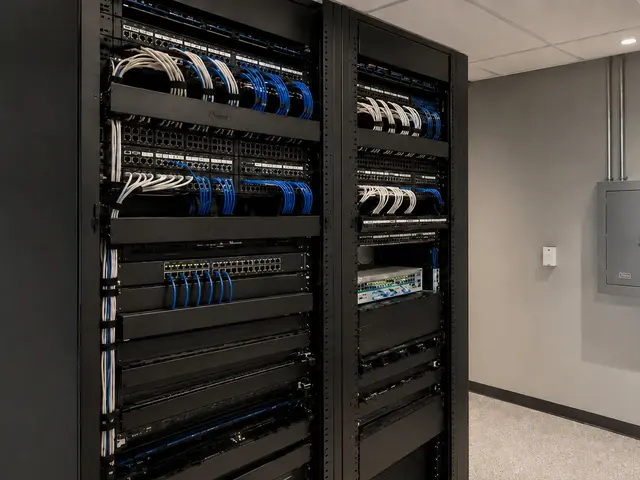
Coordinate racks, switching and PoE for connected office systems.
Separate public, staff, restricted and private workflows.
Inspect doors, pathways, closets, networks and operating constraints.
Sequence work around appointments, tenants and required access.
Verify representative operation and transfer accounts and records securely.
FAQ
Properties may consider entrances, reception approaches, parking and selected circulation areas. Private consultation or treatment spaces require careful policy and legal review.
No. Technology installation does not guarantee HIPAA compliance. The organization should make privacy and compliance decisions with qualified advisors.
Selected employee, records, supply or equipment-room doors may use credentials when hardware and egress requirements support the design.
A controlled entrance can let visitors communicate with reception or another authorized destination before release.
Often, with phased work, restricted access and scheduling agreed with the office. Sensitive records and conversations should remain protected by the customer.
Authorized organizational personnel should control viewing and export roles. Installer accounts should not replace customer ownership.
Yes, where the property has mounting rights and a defined need. Lighting, building approach and shared-landlord responsibilities need review.
The responsible IT party should approve addressing, segmentation, remote access and switch use before connected devices are configured.
It may, if ownership, route, condition and test results meet the application. Unlabeled cable should be investigated before reuse.
Provide the floor plan, operating hours, public and staff areas, existing systems, landlord contacts and authorized IT or facilities stakeholders.
Share the office type, priority areas, operating schedule and existing system information. Data Pro Communications can prepare for a focused commercial survey.