
Inventory Lots Need Measured Detail
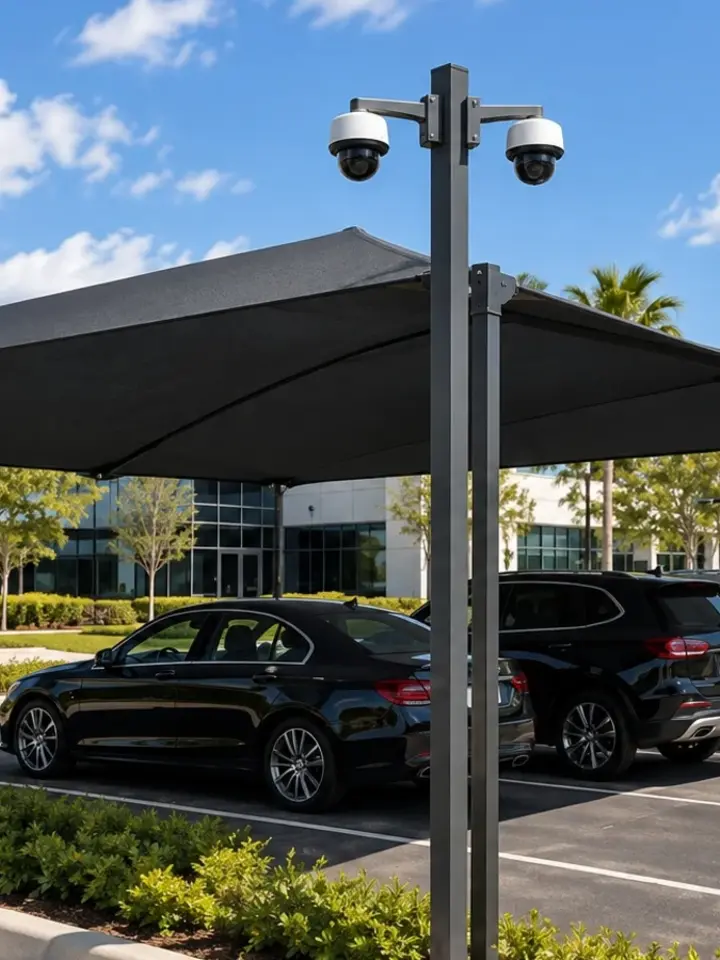
Camera positions follow vehicle rows, lighting, obstructions and required review distance.
VIDEO AND INFRASTRUCTURE FOR VEHICLE LOTS AND SERVICE OPERATIONS
Automotive dealerships and service facilities combine outdoor inventory, customer entrances, service lanes, parts areas and employee operations. Data Pro Communications plans cameras and supporting infrastructure around vehicle movement, target detail, lighting and the way managers review events.
LPR may be considered at defined entrances, but capture depends on lane geometry, angle, speed and lighting. No standard overview camera or universal design guarantees readable plates.
Camera positions follow vehicle rows, lighting, obstructions and required review distance.
Advisor areas, vehicle movement and changing doors are considered before assigning views.
General vehicle context and plate capture receive different cameras and geometry.
Selected back-of-house openings can follow authorized credential roles.
Fiber, cabinets or wireless links are planned around reach, exposure and maintenance access.
A wide inventory overview may show movement but not the detail required at a vehicle entrance or service interaction. The camera plan should define each scene and the event it is intended to support.
Large exterior areas may place devices far from the main building. Network reach, mounting, lighting and recording demand need to be evaluated with the site layout.
Plan overlapping exterior views around rows, perimeter edges and changing stock.
Provide context around vehicle arrival, write-up and movement through service areas.
Separate public arrival from staff and parts access.
Evaluate dedicated plate views at suitable lanes without guaranteeing capture.
Connect distant lot cameras through fiber, remote switching or surveyed wireless links.
Account for headlights, glass, polished vehicles and changing day or night conditions.
Observe lanes, turns, speeds and stopping points before positioning LPR or overview cameras.
Recognize that inventory rows, temporary displays and service staging can change scenes.
Provide power, network and service access for exterior cameras and cabinets.

Design lot, lane, entrance and parts-area views around defined detail.
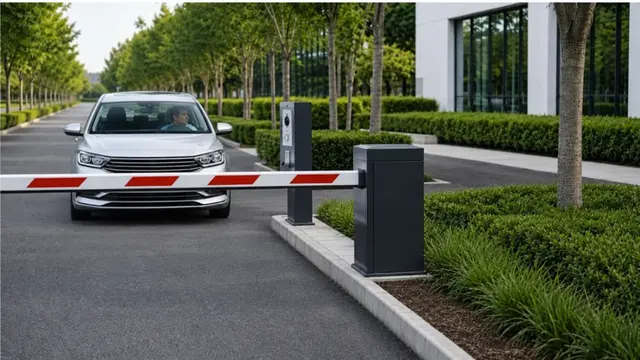
Coordinate controlled vehicle entrances where the property uses gates.
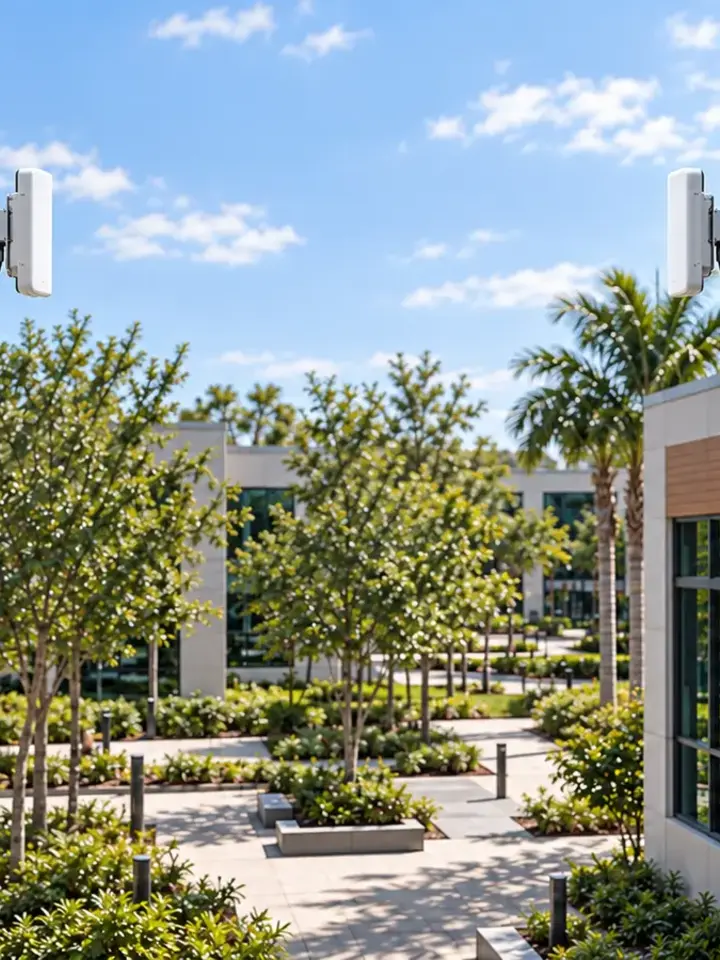
Evaluate remote lot connectivity where line of sight and capacity support it.
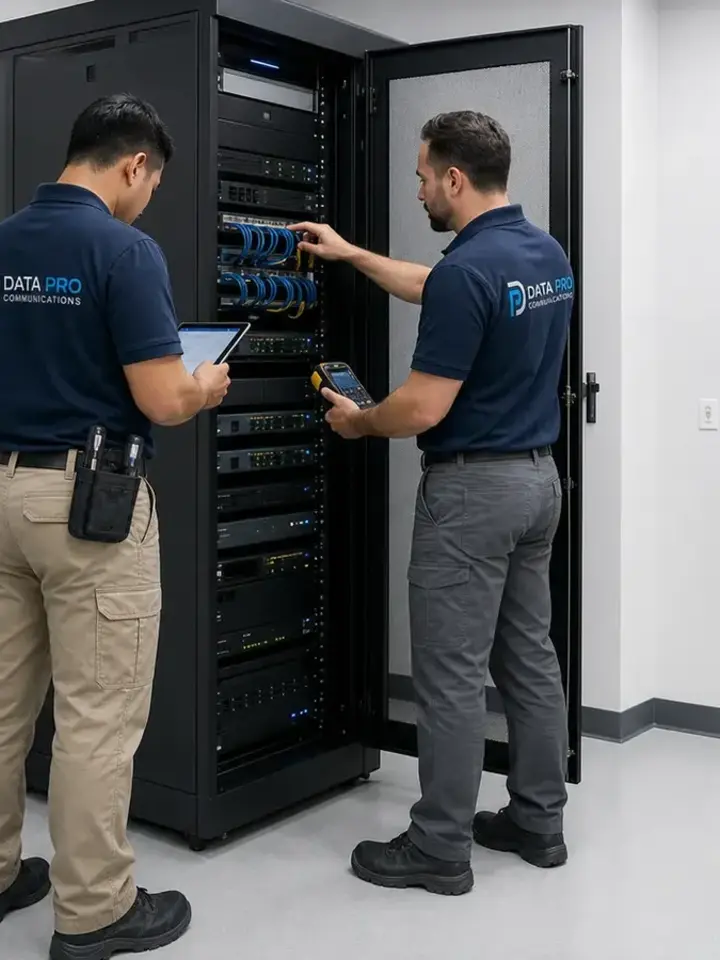
Modernize inherited exterior cameras, recorders and network paths.
Document inventory, service, customer, employee and vehicle entrance zones.
Observe angles, headlights, mounts, network reach and target detail.
Coordinate exterior and service-lane work around business activity.
Review images, recording and labels without claiming universal plate capture.
FAQ
The design considers vehicle rows, perimeter edges, lighting, mounting height and the detail required at different distances.
The camera should capture the intended vehicle and operational context without being blocked by doors, lifts, signage or changing lane activity.
A dedicated plate view may be evaluated at suitable lanes. Angle, distance, speed, headlights and lighting determine practical performance, which is not guaranteed.
Fiber, remote switching or point-to-point wireless may be considered based on distance, pathways, line of sight and service access.
Selected staff, parts or equipment-room openings can use credentials when the door and operating workflow support them.
Headlights, windshields, polished surfaces and changing sun angles can create difficult exposure. Field positioning and representative testing are important.
Often, after cameras, recorders, cabling and lot connectivity are assessed. Critical entrances and weak exterior views can be prioritized.
Camera scenes should allow for typical lot reconfiguration, display vehicles and temporary obstructions where practical.
Begin with critical entrances, service lanes, high-value exterior views, weak nighttime coverage and areas where existing cameras or recording no longer meet operational needs. Inventory reusable cameras, cabling and network infrastructure before making replacement decisions.
Provide the lot and building plan, vehicle entrances, service lanes, operating hours, existing equipment and the events managers need to review.
Share the property plan, lot layout, entrance lanes, service areas and current camera concerns. A site survey can identify the views and infrastructure required.