
Front and Rear Zones Separated
Customer-facing entrances and service, loading or yard activity receive different coverage objectives.
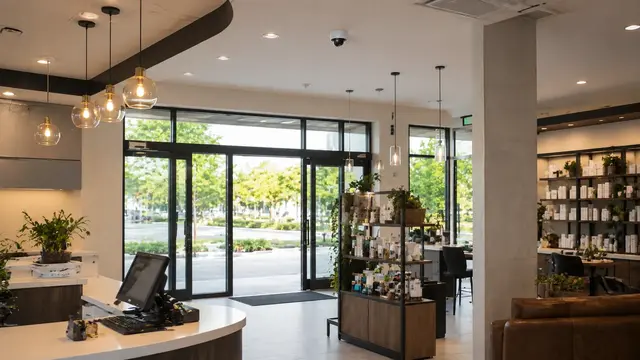
PRACTICAL COVERAGE FOR SERVICE, INDUSTRIAL AND MIXED COMMERCIAL SITES
Holly Hill commercial properties can combine customer entrances, work areas, inventory, parking, rear service access and compact exterior perimeters on one site. Data Pro Communications plans camera systems around those different operating zones so front-of-property visibility and working-area coverage are not forced into the same view.
Warehouses, service facilities, small manufacturing environments and managed properties may also need structured cabling, network distribution or access control. Existing-system conditions, pathway constraints and equipment locations are documented before an upgrade or installation is proposed.
Customer-facing entrances and service, loading or yard activity receive different coverage objectives.
Unknown cabling, recorders and network components are identified before upgrade decisions.
Equipment locations and cable routes are planned so later troubleshooting remains practical.
Supporting network and entry systems are included only where they improve the camera-led project.
A Holly Hill service or industrial property may need useful views across a small but active footprint. Vehicle movement, roll-up doors, material handling, employee entrances and customer access can overlap, making the placement and purpose of each camera more important than simply increasing device count.
Older commercial buildings may have several generations of cameras, power supplies, coax or network cabling. A structured inventory identifies which components remain serviceable and where new pathways, PoE switching or recording are needed.
Vehicles, work zones and pedestrian entrances can require separate angles rather than one wide overview.
Loading doors, outdoor equipment and after-hours access need coverage that remains useful in changing light.
Unlabeled or mixed-generation wiring can complicate camera upgrades and fault isolation.
Small telecom areas require deliberate rack, patching and service-clearance planning.
Plan views for entrances, working areas, parking, loading and exterior approaches.
Configure recording and authorized access around the facility’s review needs.
Trace camera, cabling, power, network and recorder faults before recommending replacement.
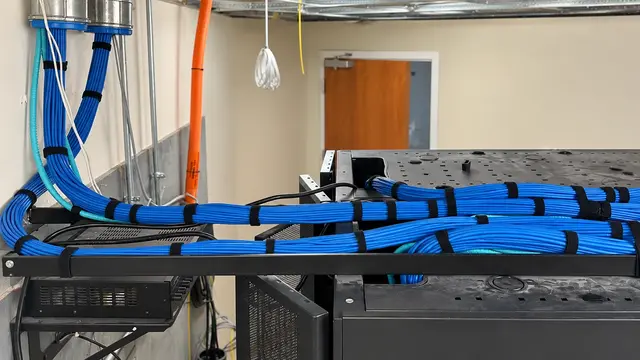
Install tested, labeled pathways for cameras and connected commercial systems.
Organize PoE switching, uplinks and remote equipment serving distributed devices.
Coordinate employee or restricted-area openings where credential management is appropriate.
Review customer arrival, vehicle staging, work-bay access and parts or equipment areas.
Cover receiving, roll-up doors, inventory movement, employee entrances and exterior loading.
Plan cameras around production-adjacent circulation without making worker-safety guarantees.
Separate public entries, staff areas, deliveries and shared parking.
Support management offices, parking, building entrances and common-area transitions.
Record camera models, recorder capacity, cable types, power sources and switch locations.
Decide where overview, recognition or other operational detail is needed at representative distances.
Test connectivity and PoE delivery so network problems are not mistaken for camera failure.
Plan penetrations, enclosures and cable changes around the actual mounting environment.
Use consistent device names, port records and pathway labels during closeout.
Credentials can limit entry to work or inventory areas while cameras provide event context.
Distributed switches or enclosures can shorten device runs where a central path is impractical.
A verified wireless path may connect detached structures when trenching is not practical.
A clear system map makes recurring service and future additions easier to scope.
Holly Hill’s adopted planning framework provides for commercial and light-industrial activity, which aligns with properties that need both public-facing and operational coverage. Compact parcels can place customer parking, service bays, loading and employee access close together, so camera views should be tested against actual movement rather than a simple site perimeter.
Facility teams can prepare by listing failed cameras, unexplained recording gaps, recurring network issues and areas where property use has changed. That evidence helps prioritize corrections and prevents a modernization project from replacing useful components without a reason.
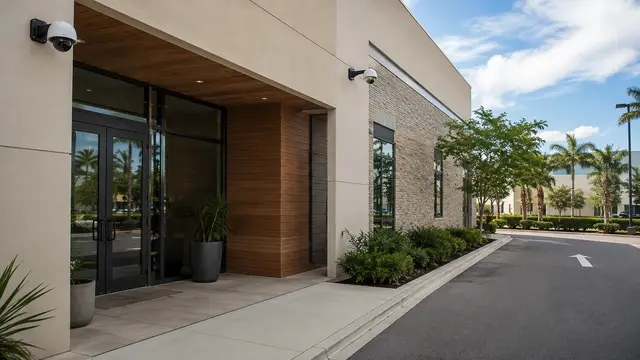
Build commercial video coverage around site activity and recording needs.
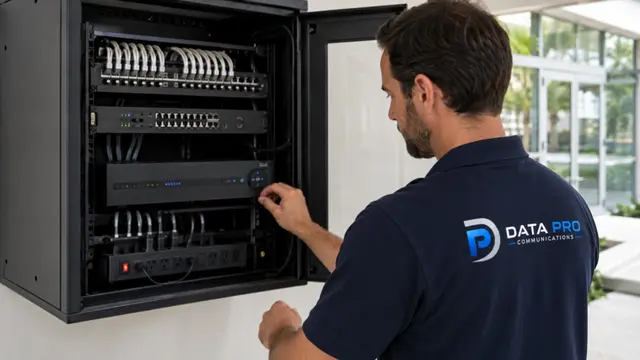
Find the cause of offline devices, weak video or recording gaps.
Replace improvised pathways with tested and labeled commercial cabling.
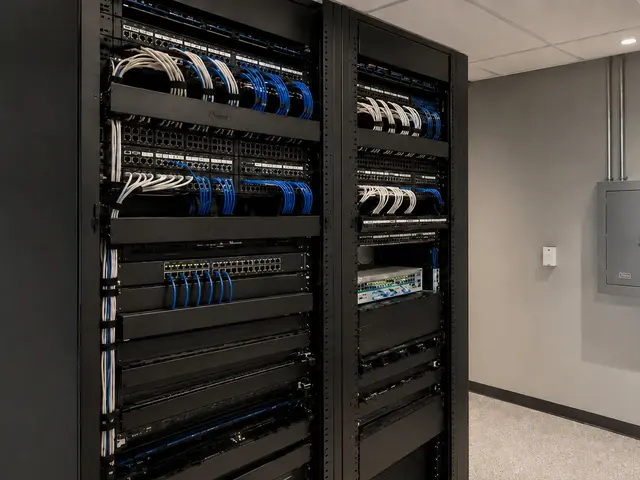
Support cameras with organized PoE switching and uplinks.
Document recurring issues and plan practical corrective work.
Review system applications for production, shipping and exterior operating zones.
Qualifying projects are reviewed for Holly Hill businesses and professionally managed properties. The project location, site access and technical scope determine scheduling; no Holly Hill office or walk-in location is claimed.
List failed views, recording concerns, operational changes and affected property zones.
Inspect accessible cameras, cabling, switches, recorders and equipment locations.
Separate urgent corrections, reusable components and planned improvements.
Verify video and connectivity, apply labels and provide usable closeout information.
Data Pro Communications supports commercial security camera and related low-voltage projects under FL License #EC13016138. Project scope, permitting responsibilities and coordination with other trades depend on the property and accepted work.
FAQ
The review may include the camera, cable path, connector, PoE source, switch port, network configuration and recorder status. Testing the full path helps identify the cause before parts are replaced.
Common priorities include customer arrival, vehicle staging, work-bay approaches, employee access, parts or equipment areas and rear service zones. Each view should have a defined operational purpose.
Yes. A condition assessment can document both systems, their recording equipment and available pathways. The upgrade plan can then identify what can remain temporarily and what requires replacement.
Camera placement should account for door position, interior-to-exterior lighting, vehicle height, loading activity and the detail needed at the threshold. A separate interior or exterior view may be required.
A remote cabinet may help when device distances exceed practical copper reach or many endpoints serve one area. Location, environmental conditions, power coordination, uplink method and service access must be verified.
It may be suitable when the structures have stable mounting points, clear line of sight, appropriate distance and available power. Interference, alignment and future obstructions should be evaluated before selection.
Prioritize clear patching, labeled switch ports, recorder access, cable management and adequate working clearance. Unrelated or abandoned wiring should be identified before cleanup decisions.
Useful records include device names, locations, camera views, cable labels, switch or recorder connections, authorized users, configuration notes and any known limitations or future recommendations.
No. Video can support visibility and incident review, but it does not guarantee that loss or damage will not occur. Coverage, lighting, maintenance and operating procedures all affect usefulness.
List affected cameras or areas, the symptoms, when the issue began, recent network or power changes, recorder information and any available system documentation. Photos of equipment labels can also help initial review.
Share the facility layout, known camera problems and the operating areas that matter most. The team can review whether troubleshooting, modernization or a new site survey is appropriate.