
Door Conditions Surveyed
Frame, hardware, locking method, cabling access and existing devices are documented at each opening.
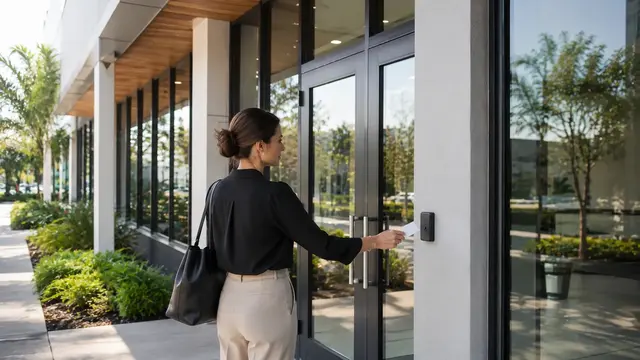
MANAGED ENTRY FOR COMMERCIAL DOORS
Access control gives authorized organizations a managed way to grant, change and revoke entry at commercial doors. Data Pro Communications coordinates readers, controllers, credentials, network connections and event records with the actual opening and the customer's operating workflow.
A reliable design requires more than mounting a reader. Door hardware, locking method, egress requirements, power, communications and responsibility for credential administration must be confirmed for each opening.
Frame, hardware, locking method, cabling access and existing devices are documented at each opening.
The customer identifies who can issue credentials, change schedules and review access events.
Applicable life-safety, accessibility and door-hardware requirements are coordinated with the responsible professionals.
Controllers, readers and connected stations receive suitable low-voltage pathways and supported communications.
Door activity may be paired with relevant camera views when the platforms and accepted scope support it.
The physical opening determines what equipment can control the door, while the organization determines who should enter and when. Both sides need to be settled for a system that is usable after installation.
Credential formats, schedules, exception handling, event retention and account ownership should be documented before handoff. The design also needs a clear response for power loss, network interruption and authorized emergency access based on the applicable opening requirements.
Control selected entrances with a platform sized around the property's actual openings and administration needs.
Evaluate card, fob or supported mobile workflows according to security policy and user management.
Install low-voltage pathways, field devices and protected controller locations for the accepted door design.
Organize user groups, time schedules and administrative roles around the customer's operating model.
Connect door events with camera or intercom context when compatible systems provide a useful operational workflow.
Identify the door, frame, latch, closer, existing electrified hardware and required professional coordination.
Document the intended fail condition and applicable egress requirements with the responsible design parties.
Assign account ownership, enrollment, revocation and audit responsibilities to authorized customer personnel.
Coordinate connectivity, time synchronization, storage and remote administration with IT policies.
Hotels and resorts may separate guest circulation from employee, service, office and equipment areas. Commercial access control can manage staff-facing openings without being presented as a replacement for guest-room locking systems or property procedures.
Condominium and HOA properties often consider management offices, amenities, pedestrian gates, parking entries and service spaces. The credential workflow should account for residents, staff, vendors and administrative turnover without making unsupported promises about security outcomes.
Offices, healthcare suites, warehouses and automotive facilities may need scheduled access to selected rooms or entrances. Each opening still requires an individual door and hardware review.
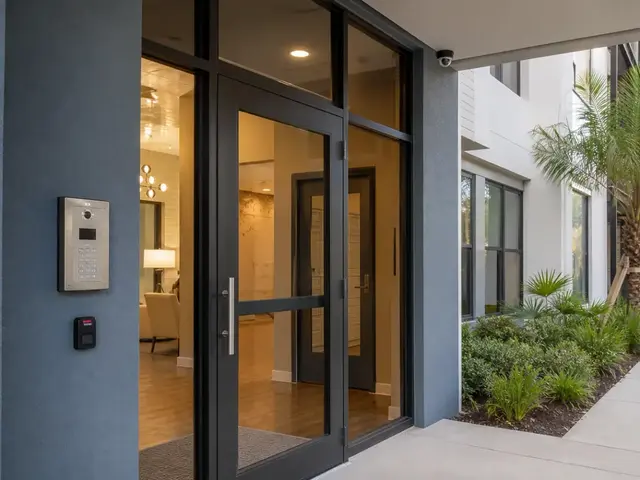
Add visitor communication and authorized call handling at selected entrances.
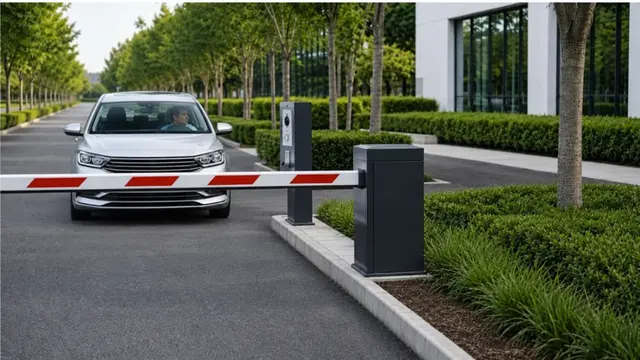
Coordinate vehicle entrances that use credentials, intercoms or access permissions.

Provide visual context at access-controlled openings where camera placement supports the use case.
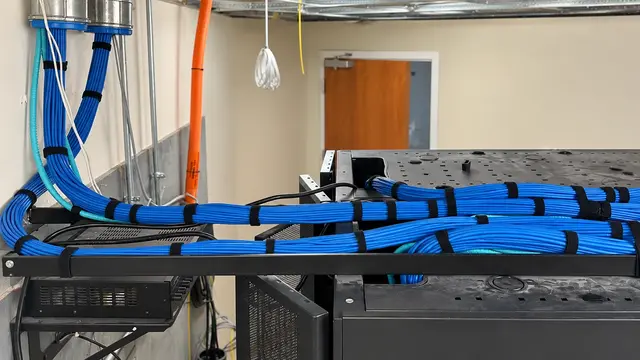
Build documented pathways between readers, controllers and network equipment.
List controlled doors, user groups, schedules and administrative responsibilities.
Review hardware, egress, power, pathways and any work assigned to other trades.
Complete the accepted low-voltage scope and build the initial permission structure.
Verify representative credentials and events, then hand account control to authorized personnel.
FAQ
Many office, employee, amenity and service openings can be considered, but each door needs a hardware and egress review. The locking method and required trade coordination vary by opening.
Platforms may support cards, fobs, keypads or mobile credentials. The right choice depends on user administration, device compatibility, security policy and the customer's operating workflow.
Sometimes, if the existing hardware, frame and locking arrangement are compatible and in suitable condition. A door survey should identify what can remain and what requires another trade.
Authorized administrators create users, assign groups or schedules and revoke credentials when access changes. Account ownership and procedures should be established before handoff.
Behavior depends on the locking hardware, design and applicable opening requirements. The intended fail condition and egress operation must be confirmed with the responsible parties.
Compatible systems may associate a door event with a relevant camera view. The camera still needs its own placement, recording and retention plan.
Not necessarily. Many properties use access control on selected openings while retaining mechanical key procedures elsewhere. The controlled-door list should follow operational need.
Commercial access control can manage selected employee, service or administrative openings. It should not be presented as a substitute for guest-room locking or the property's operating procedures.
Responsibilities are assigned during planning and may involve door-hardware, locksmith, electrical or other qualified trades. The low-voltage scope should identify those boundaries clearly.
List the proposed doors, user groups, schedules, current hardware and any existing credential system. Include known construction or life-safety coordination requirements.
Provide the openings under consideration, current locking hardware, user groups and schedule needs. That information helps frame the site survey and required trade coordination.