
Inventory before Assumptions
Exact models, versions, licenses, pathways and connections are recorded before reuse is proposed.
A PRACTICAL GUIDE TO INVENTORY, COMPATIBILITY AND STAGED MODERNIZATION
A camera-system upgrade should begin with evidence about the system already in place. Camera models, cabling, mounts, recorders, licenses, storage, network capacity, user accounts and operational problems all affect what can be retained.
The objective is not to preserve old equipment at any cost or replace everything automatically. A disciplined inventory allows the property to compare reuse, staged replacement and platform-transition options against current needs and supportability.
Exact models, versions, licenses, pathways and connections are recorded before reuse is proposed.
Streaming, recording, analytics, audio and events are checked separately rather than inferred from a logo.
Phases and temporary limitations are defined before platforms or field devices change.
Accounts, permissions, naming, time settings and documentation are part of the upgrade.
The assessment should identify reliable components, unsupported or failed equipment, performance gaps, cybersecurity concerns and infrastructure limitations. It should also connect each problem to an operational need rather than treating age alone as the deciding factor.
Open interoperability standards can help evaluate compatibility, but conformance must be checked for exact products, profiles and firmware or software versions. Proprietary functions may still require manufacturer-specific confirmation.
Keep components that remain supported, compatible, serviceable and useful for the required task.
Correct settings, naming, permissions, recording or network issues when hardware remains suitable.
Move compatible devices when placement, not capability, is the main limitation.
Remove components that fail, lack support, cannot meet the requirement or create unacceptable operational risk.
Document lower-priority items, dependencies and trigger conditions for a later phase.
Verify exact model, firmware, stream, event and control support with the intended client.
Check channels, licenses, codecs, storage, search and export requirements.
Review PoE, switch ports, uplinks, segmentation, bandwidth and remote access.
Test reusable copper or fiber and confirm distance, terminations, labels and pathway access.
Confirm where analytics run, what events are supported and how metadata is recorded or searched.
Review credentials, firmware, certificates, vendor support and device-hardening requirements.
Record manufacturers, models, serials, firmware, licenses and support status.
Document switches, ports, PoE, IP information, VLANs, uplinks and remote connectivity.
Capture retention, schedules, frame rates, resolution, compression, timestamps and storage health.
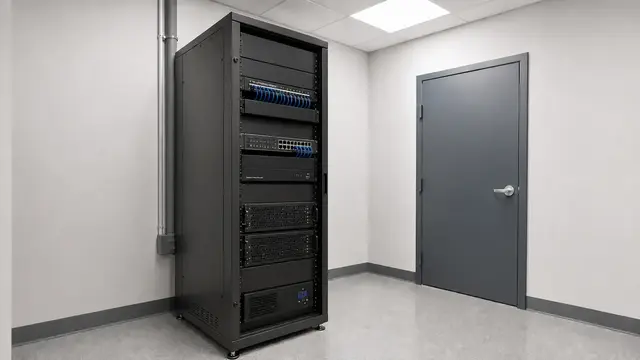
Inspect mounts, housings, cable routes, racks, patching, power coordination and equipment rooms.
Identify who watches, searches, exports, administers and services the system.
Preserve configurations, device lists and other recoverable records where the platform supports it.
State whether old and new recording or camera systems operate together during a phase.
Keep priority entrances and operations covered where practical while equipment changes.
Verify required views, playback, storage, timestamps, accounts, events and documentation before completion.
Compare encoders, hybrid recording, new network cameras and pathway reuse.
Plan channels, storage, licenses, camera compatibility and user retraining.
Address servers, clients, device support, permissions, maps, events and exports.
Replace weak or unsupported devices while preserving useful infrastructure.
Develop consistent naming, administration and support without ignoring site-specific differences.
Daytona-area hotels, condominiums, offices, warehouses, retail, healthcare and automotive properties often modernize while remaining operational. Occupancy, service access and network ownership can be as important as the selected cameras.
A site-specific inventory prevents the local name or property type from becoming a shortcut. The upgrade should be based on tested equipment, documented requirements and a realistic sequence for that site.
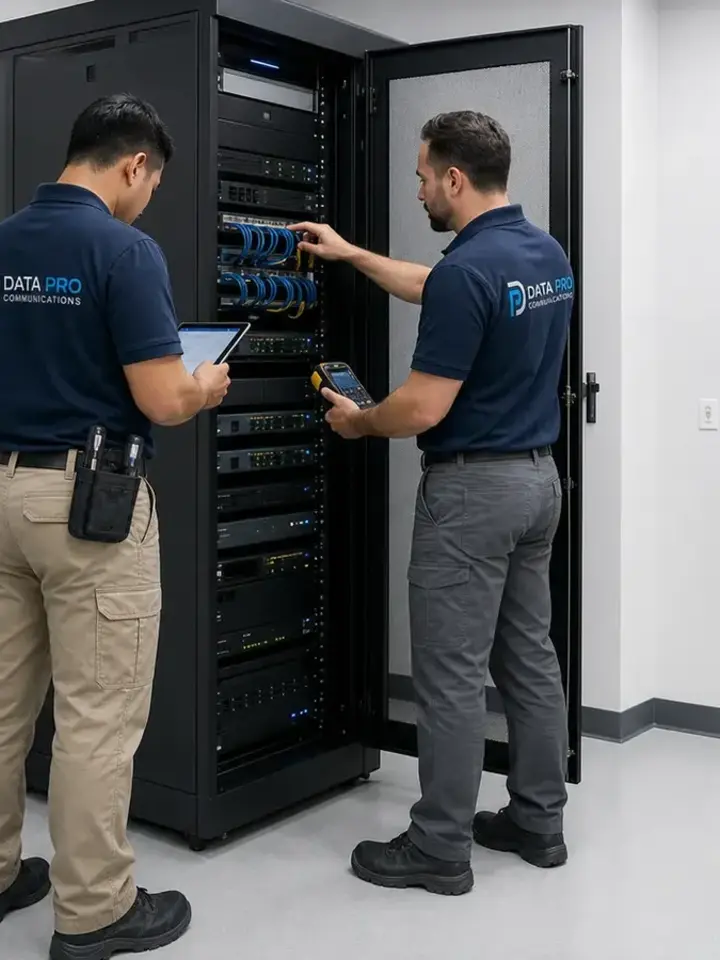
Implement the approved reuse, replacement and commissioning scope.
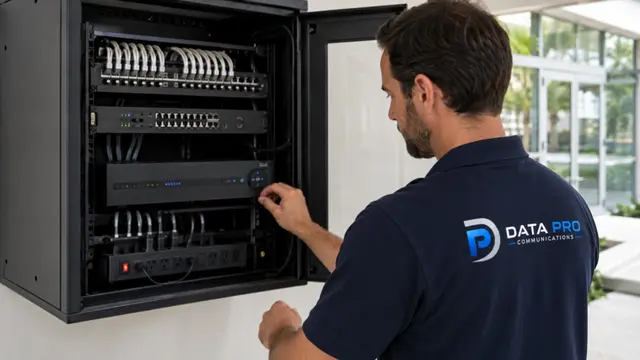
Resolve faults that should be corrected before larger modernization.
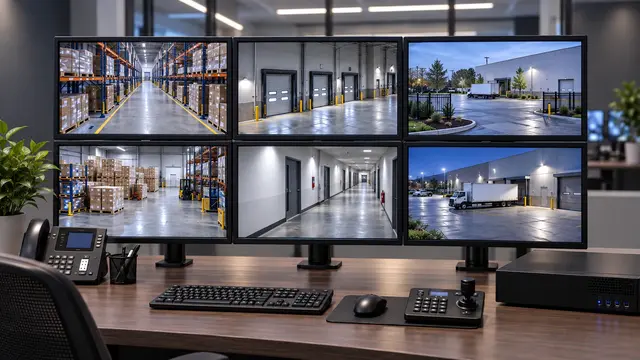
Modernize recording, search, permissions and multi-site administration.
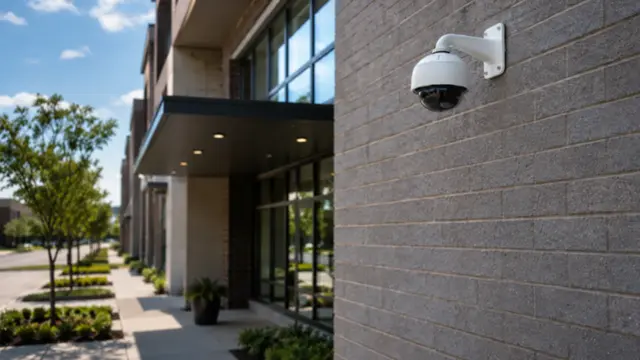
Deploy supported network cameras and recording where the design requires them.
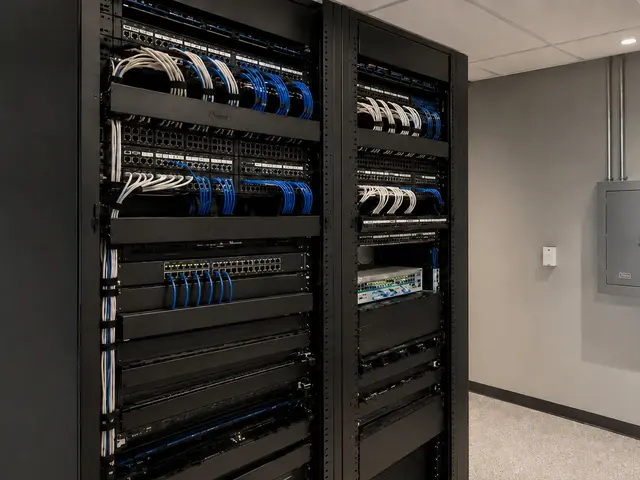
Upgrade switching, racks, segmentation and uplinks that limit the system.
Replace or extend labeled pathways where existing media is unsuitable.
Phase upgrades around occupied hospitality operations.
Coordinate high-rise infrastructure and management approvals.
Reassess weak garage and lot views using field conditions.
Plan the backbone needed for a distributed upgrade.
Document operational problems, search needs, access and support issues.
Record physical, network, recording and administrative components.
Verify exact products, profiles, performance and reusable infrastructure.
Sequence platform, network and camera work around useful coverage.
Test the required functions, update accounts and deliver complete records.
Data Pro Communications supports commercial security camera and related low-voltage projects under FL License #EC13016138. Project scope, permitting responsibilities and coordination with other trades depend on the property and accepted work.
FAQ
Check exact model, firmware, condition, image performance, stream support, cybersecurity status and compatibility with the intended recorder or VMS. A working image alone does not confirm long-term suitability.
No. Conformance is tied to profiles, exact products and versions, and some profile features are conditional. Analytics, audio, events, PTZ and proprietary functions should be verified individually.
They may be retained through hybrid recording or encoders when condition, image quality and operational value justify it. The transition design should state limitations and the eventual replacement plan.
Review camera compatibility, channel and license counts, codecs, storage, retention, bandwidth, remote access, user accounts, export needs and the process for moving to the new platform.
Reuse depends on cable type, route, distance, condition, terminations, test results and the new application. Unlabeled or inaccessible pathways may need investigation before the proposal.
Plan phases around priority cameras and operating periods, define old-and-new coexistence where possible, document cutover order and state temporary limitations before work begins.
Shared or obsolete credentials create administration and security problems. Modernization should define individual roles, remove outdated access and document who owns system administration.
Check supported firmware, credential practices, certificates where used, network segmentation, remote access, unused services, device-hardening guidance and responsibility for future updates.
Compare retained and replaced components, feature compatibility, licenses, infrastructure, cutover sequence, testing, training, documentation, exclusions and ongoing support expectations.
Full replacement may be more practical when the platform is unsupported, compatibility is poor, infrastructure is unreliable, administration is uncontrolled or phased coexistence would add unacceptable complexity.
Bring model information, recordings, service history, network contacts and the operational problems that need to be solved. Data Pro Communications can help turn those facts into a structured upgrade review.