
PoE Capacity Checked
Switch port count and power budget are compared with the selected cameras and future additions.
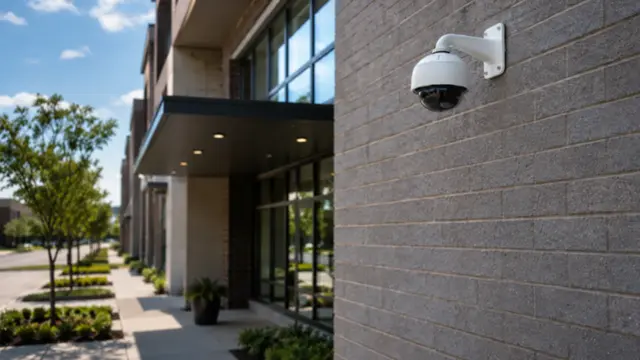
NETWORKED CAMERAS, RECORDING AND TRANSPORT
IP video surveillance places cameras on a managed network, making switching, addressing, bandwidth, storage and account security part of the camera design rather than background details.
Data Pro Communications coordinates the physical camera requirement with the property's IT responsibilities, whether devices connect to a local rack, a remote building, a fiber backbone or a dedicated video environment.
Switch port count and power budget are compared with the selected cameras and future additions.
Camera streams are planned across local switching and uplinks without treating the network as unlimited.
Administrative ownership, credentials and supported update responsibilities are defined for the installed system.
Remote floors and buildings can connect through suitable backbone links instead of stretching copper beyond supported reach.
Required streaming, recording and control features are checked between selected components rather than assumed from a logo alone.
An IP camera sends video, events and management traffic through a network path. Reliable deployment requires enough PoE, appropriate switching, stable uplinks and a recording destination sized for the selected streams.
The design also establishes who can administer devices, how time is synchronized, where addressing is managed and how remote support is permitted. Those decisions become more important at properties with several closets, buildings or management groups.
Connect supported network cameras through switches sized for port count, power and environmental conditions.
Use local closets, fiber uplinks or remote equipment cabinets to serve cameras beyond one central rack.
Direct streams to an NVR, server or supported storage architecture aligned with retention and availability needs.
Coordinate user roles, platform access and network rules with the organization responsible for IT security.
Use supported device and recording alerts to help authorized operators recognize outages that need attention.
Balance resolution, frame rate, compression and scene complexity against storage and network capacity.
Follow the customer's network standards for segmentation, addressing, remote access and administrative control.
Measure aggregate video load where multiple cameras converge on a closet, building link or recording server.
Select suitable switches, cabinets and cable transitions for garages, outdoor structures and uncontrolled spaces.
Oceanfront condominiums and hotels may place cameras across towers, parking levels, service areas and remote network closets. The video design must follow the building's actual risers, fiber paths and management responsibilities.
A multi-building resort or commercial campus can use fiber between structures while retaining local PoE distribution near camera groups. Remote cabinets need appropriate power, space, access and environmental review.
Inland offices, healthcare properties, warehouses and automotive facilities may have different network ownership and operating schedules. IP video should integrate with those conditions without assuming unrestricted access to the production network.
Coordinate switching, racks, uplinks and administration for the active network supporting video.
Carry video between floors, buildings or distant closets over an appropriate optical backbone.
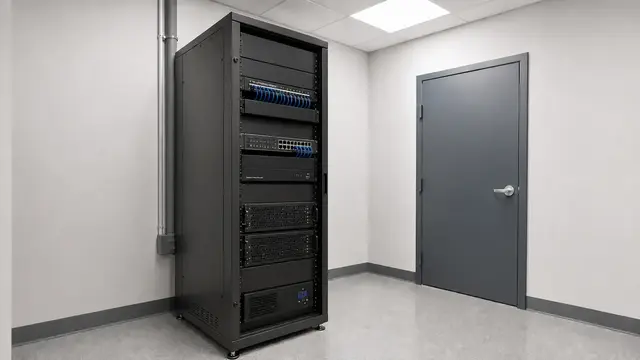
Size recording and user access around the streams produced by the IP camera system.
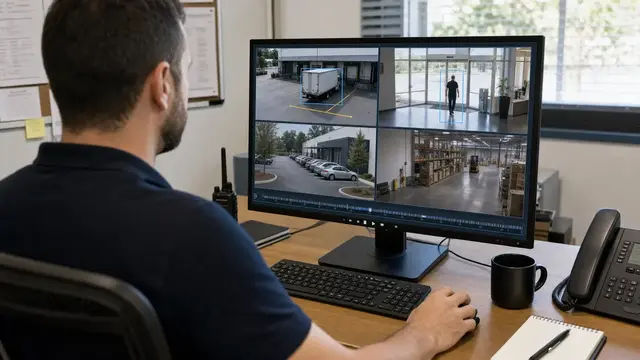
Evaluate supported analytic functions after scene quality and platform compatibility are established.
Estimate camera profiles, aggregate bandwidth and retention before selecting network and storage capacity.
Map PoE switches, closets, uplinks, recording servers and remote buildings across the property.
Assign addressing, credentials, time, updates, remote access and security responsibilities.
Confirm live video, recording, search and representative network behavior from each planned segment.
FAQ
It is a camera system in which video devices communicate over an IP network to recording, management and viewing platforms. PoE, switching, bandwidth, addressing and account security are part of the design.
The appropriate topology depends on customer standards and capacity. Cameras may use dedicated switching, segmented networks or another approved design coordinated with the organization responsible for IT.
The switch must provide enough supported ports and aggregate power for the selected cameras, including features that increase consumption. Practical margin and environmental conditions should also be considered.
Fiber may be appropriate between buildings, across long backbones, between floors or where electrical and capacity conditions make copper unsuitable. Local camera drops can still use supported copper from nearby switches.
Bandwidth varies with resolution, frame rate, compression, image complexity and stream configuration. Aggregate traffic should be modeled where cameras converge on switches, uplinks and recorders.
Some functions may interoperate through supported standards or integrations, but streaming alone does not guarantee every feature. Recording, audio, events, analytics and device management should be verified individually.
The customer should designate authorized ownership and recovery responsibility. Routine viewing can be separated from configuration rights, and credentials should not be submitted through public forms.
Yes. The design may use local PoE switches, fiber uplinks or surveyed wireless connections, depending on distance, capacity, line of sight, equipment locations and service access.
No. Lens choice, distance, angle, motion, lighting, compression and recording settings all affect usable detail. Resolution is one part of the scene design.
Useful information includes network ownership, switch and fiber locations, addressing or segmentation standards, remote-access rules, recorder location and the contacts authorized to approve changes.
Tell us how many buildings or network closets are involved, who manages the network and where video must be recorded and reviewed. That topology is the useful starting point for an IP surveillance survey.