
Production Views Have Defined Purposes
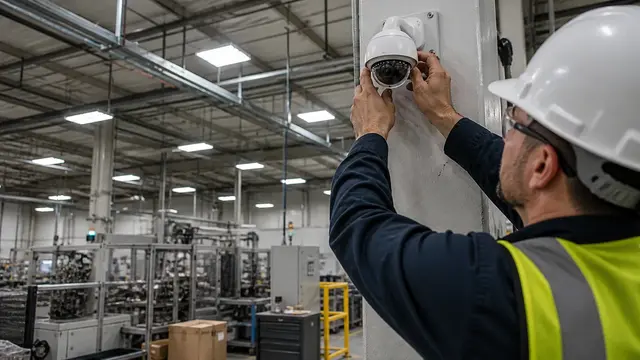
Camera scenes are tied to operational review rather than broad claims about monitoring workers.
TECHNOLOGY FOR PRODUCTION, SHIPPING AND DISTRIBUTED INDUSTRIAL SITES
Manufacturing and industrial properties combine production, employee access, shipping, yards and equipment infrastructure within demanding operating environments. Data Pro Communications coordinates cameras, access, cabling and network transport around those zones and their service requirements.
The technology can support operations and review, but it does not replace safety programs or promise worker-safety outcomes.
Camera scenes are tied to operational review rather than broad claims about monitoring workers.
Distances, lighting, vehicles and mounting options shape exterior coverage.
Selected doors and areas use permissions defined by authorized management.
Fiber or surveyed wireless paths connect detached structures where appropriate.
Cameras, cabinets and cable transitions remain reachable for industrial service conditions.
Production floors, storage, docks and yards present different lighting, obstruction and network conditions. The system plan should separate evidence goals at each zone and recognize movement from equipment, materials and vehicles.
Industrial work may also involve shutdown windows, lift access, protective pathways and coordination with plant engineering or contractors. Those requirements belong in the scope before field work starts.
Plan selected operational views where management has a defined review need.
Cover docks, staging and vehicle transitions around changing light and obstructions.
Control selected entrances, offices, cages or equipment areas.
Extend cameras and connectivity across outdoor or detached zones.
Support high device counts and distant equipment rooms through documented backbones.
Select locations and equipment around heat, dust, moisture, vibration and service access.
Identify where installation or cutover requires controlled downtime.
Coordinate mounts, conduit and cabinets around forklifts, machinery and material movement.
Align switching, segmentation and remote access with plant IT or engineering.

Design production, shipping and yard views around defined evidence needs.
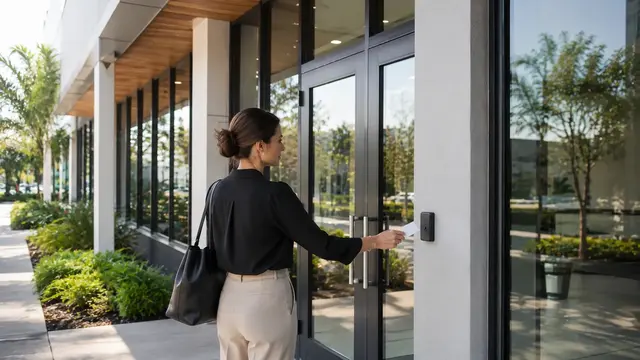
Manage selected employee and restricted-area entrances.
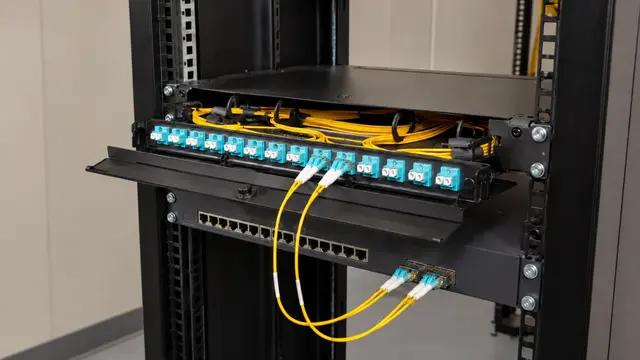
Connect remote buildings, IDFs and outdoor equipment zones.
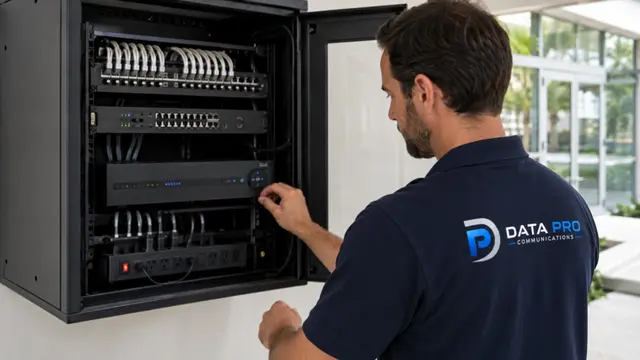
Document faults and prioritize upkeep in demanding environments.
Identify production, employee, shipping, storage and yard workflows.
Assess mounts, pathways, distances, networks and work restrictions.
Schedule lifts, access and cutovers with the responsible site teams.
Confirm representative operation and document devices, links and accounts.
FAQ
Operations may consider production context, docks, shipping, yards, employee entrances and selected storage areas. Each scene needs a defined review purpose.
Only after vibration, heat, obstructions, service access and site safety requirements are reviewed with responsible personnel.
Fiber or surveyed wireless links may connect detached buildings, depending on pathways, distance, capacity and service expectations.
Selected openings can use credentials based on job roles and site policy, subject to door hardware and egress requirements.
Vehicle flow, materials, lighting, perimeter distance, mounting and network reach affect cameras and gate systems.
Yes, when the scope, access and trade dependencies are coordinated with the site's shutdown plan. Not every task requires full downtime.
No. Video can support operational review but does not replace safety programs, training or professional hazard controls.
Placement, enclosures, mounting and cable pathways should match heat, dust, moisture, vibration and physical exposure at the site.
Often, after recorders, cabling, cameras and network capacity are evaluated. A phased plan should document temporary limitations.
Provide process zones, shift schedules, site plans, restricted areas, environmental conditions, network rooms and current system records.
Provide the site layout, operating schedule, priority areas, environmental concerns and equipment-room information. A survey can turn those conditions into a practical scope.