
Florida Licensed Low-Voltage Work
Camera cabling and related low-voltage work are performed under FL License #EC13016138.
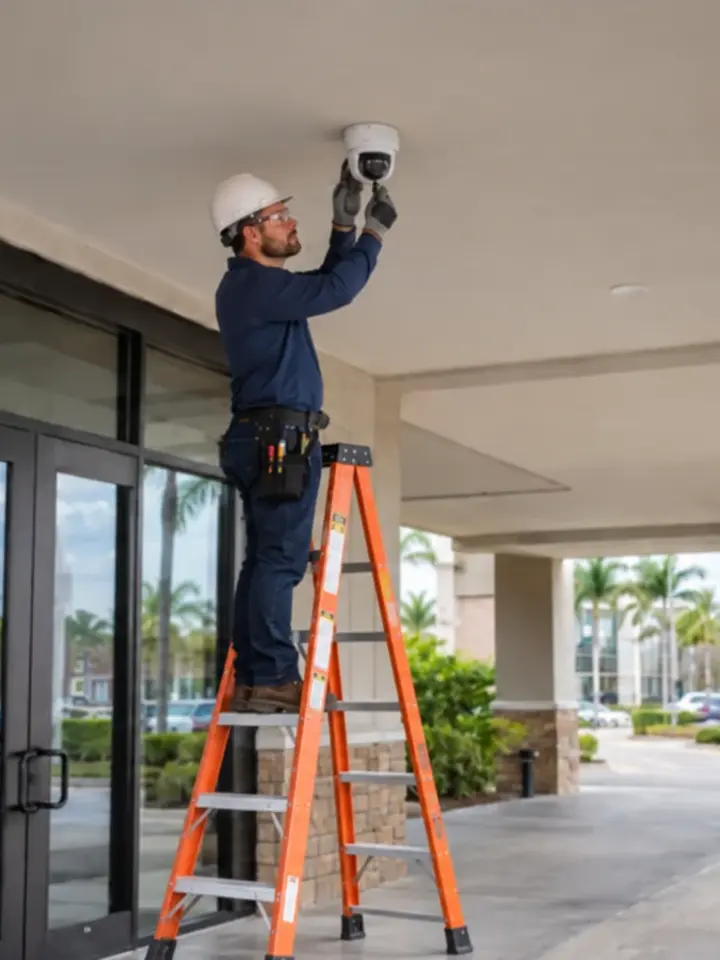
COMMERCIAL CAMERA DESIGN AND INSTALLATION
Data Pro Communications plans commercial camera systems from the scenes a property must review, then connects those views to mounting, pathways, network transport, recording and authorized access.
The installation scope can cover a single occupied building, a parking structure, an oceanfront managed property or a multi-building commercial site. Final device selection follows a survey of distance, lighting, obstructions and infrastructure.
Camera cabling and related low-voltage work are performed under FL License #EC13016138.
Each camera is assigned a scene, target detail and review purpose before equipment is selected.
Ceilings, risers, exterior transitions and equipment locations are reviewed as part of the installation plan.
Retention, search and export needs shape recorder capacity and operator setup.
Representative live and recorded images are checked with the authorized project team before handoff.
A camera count is not a design. The survey identifies what the property needs to see, when the scene is most difficult, and how much detail an operator must recover later. Broad context, person recognition, transaction review and dedicated vehicle detail require different positions and fields of view.
Installation planning also follows the signal from each mount to the recording environment. Cable length, PoE availability, switch placement, interbuilding transport, recorder location and account ownership are resolved before they become field changes.
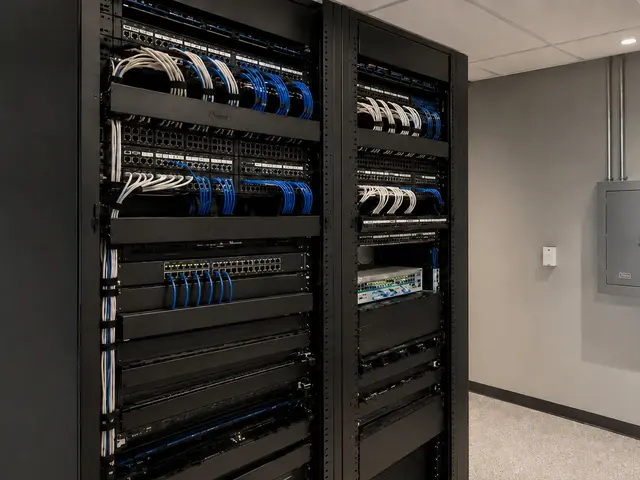
Document entrances, parking, service areas, lobbies, corridors, yards and other operating zones that require video.
Match lens, resolution, mounting height and physical placement to target distance, lighting and service access.
Build supported copper, fiber or surveyed wireless paths between field devices, switches and recording locations.
Configure retention, live view, search, export and authorized roles around the customer's review workflow.
Verify representative images and recording, then organize labels, device names and access ownership for ongoing use.
Determine whether a view is intended for awareness, recognition, identification or another defined evidentiary purpose.
Review backlight, headlight glare, nighttime transitions, landscaping, columns and changing activity at the actual scene.
Confirm who manages switches, addressing, security rules and remote connectivity at the property.
Keep cameras, cabinets and cable transitions reachable for cleaning, adjustment, troubleshooting and future replacement.
Daytona Beach camera projects may involve oceanfront hotels, condominium towers, parking garages, visitor-facing commercial spaces and inland office, healthcare, automotive or industrial properties. Those settings create different work windows and image priorities.
Hospitality properties often separate guest arrivals, public areas, employee entrances and back-of-house activity. Managed condominiums may add vehicle gates, garages, lobbies, common spaces and equipment distributed across floors.
Outdoor mounts and cable transitions near the coast deserve property-specific review for exposure and serviceability. Product ratings alone do not replace suitable placement, installation details and planned maintenance access.
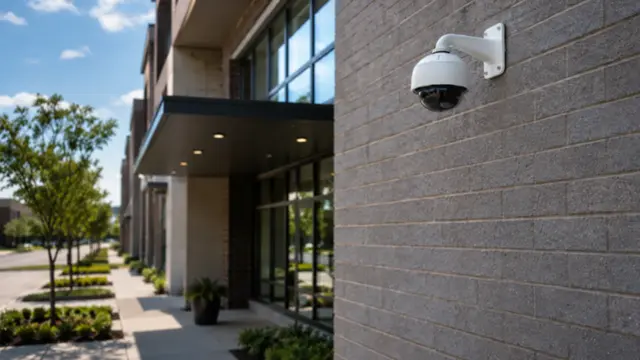
Use networked cameras and supported transport where the project benefits from scalable video, remote administration and defined device-level management.
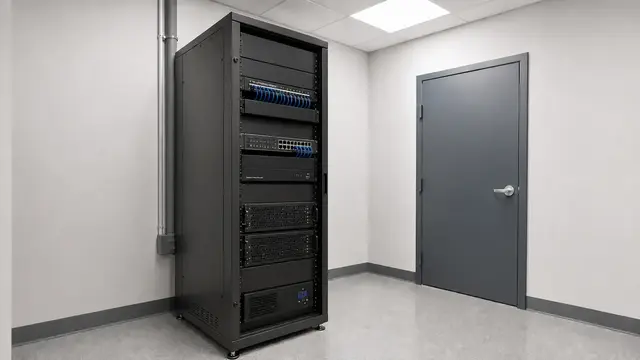
Coordinate recording duration, authorized off-site access and export responsibilities with the installed camera system.
Build documented copper pathways when camera locations require new supported network drops.
Connect floors, remote buildings or distant equipment locations when copper reach is not appropriate.
List the scenes, events and authorized users that give the project its operational purpose.
Measure distances, inspect mounting options and trace feasible paths to power, switching and recording.
Install the accepted devices and transport, then establish recording, naming and user access.
Review representative day or night conditions when practical and provide an organized operational handoff.
FAQ
A complete scope may include site survey, scene planning, camera and mount selection, cabling or network transport, recording, authorized user setup, image verification and handoff documentation. The exact combination depends on the property.
Placement follows the event and detail the customer needs to review. Distance, angle, lighting, obstructions, mounting access and the route to recording infrastructure are evaluated at the scene.
Possibly. Existing cable, switches, fiber and equipment locations should be inspected for condition, capacity, compatibility and support for the proposed camera workload before reuse is included.
Camera quantity follows the required scenes and target detail, not a standard property-size formula. Entrances, parking, service areas, controlled points and operational zones are reviewed individually.
Yes, when the design accounts for lighting changes, columns, ramps, long distances, vehicle movement, mounting locations and network reach. Several purpose-built views may be more useful than one overly broad image.
Authorized remote viewing can be included when the selected platform, network and customer security requirements support it. User roles and account ownership should be established during setup.
Storage is estimated from camera count, resolution, frame rate, compression, recording schedule, scene activity and the desired review period. Final capacity should be checked against representative settings.
They can provide nearby visual context when the systems and customer workflow support coordination. Cameras do not perform the credential or communication function of access-control and intercom equipment.
No. Image usefulness depends on scene conditions, placement, lighting, maintenance, recording health and the event itself. Planning reduces avoidable gaps but cannot guarantee a specific result.
Share the complete property address, property type, areas that need coverage, present equipment, known network or construction constraints, desired retention and the authorized project contacts.
Share the address, property type, required views and any known network or construction constraints. Data Pro Communications can use that information to prepare for a focused site conversation.